Invisible symptoms of MDS
Looking fine doesn’t mean feeling fine
Many of the most impactful symptoms of MDS are invisible. The MDS Alliance Global Survey 2024 found that these hidden symptoms profoundly affect quality of life, even when patients may appear outwardly well.
Greater awareness of MDS associated hidden symptoms can help improve understanding, support and access to appropriate care.
Ten flash cards, each linked to what patients told us in the survey.
Ten invisible symptoms
Download the cards and share them with #InvisibleSymptoms #ThinkMDS.
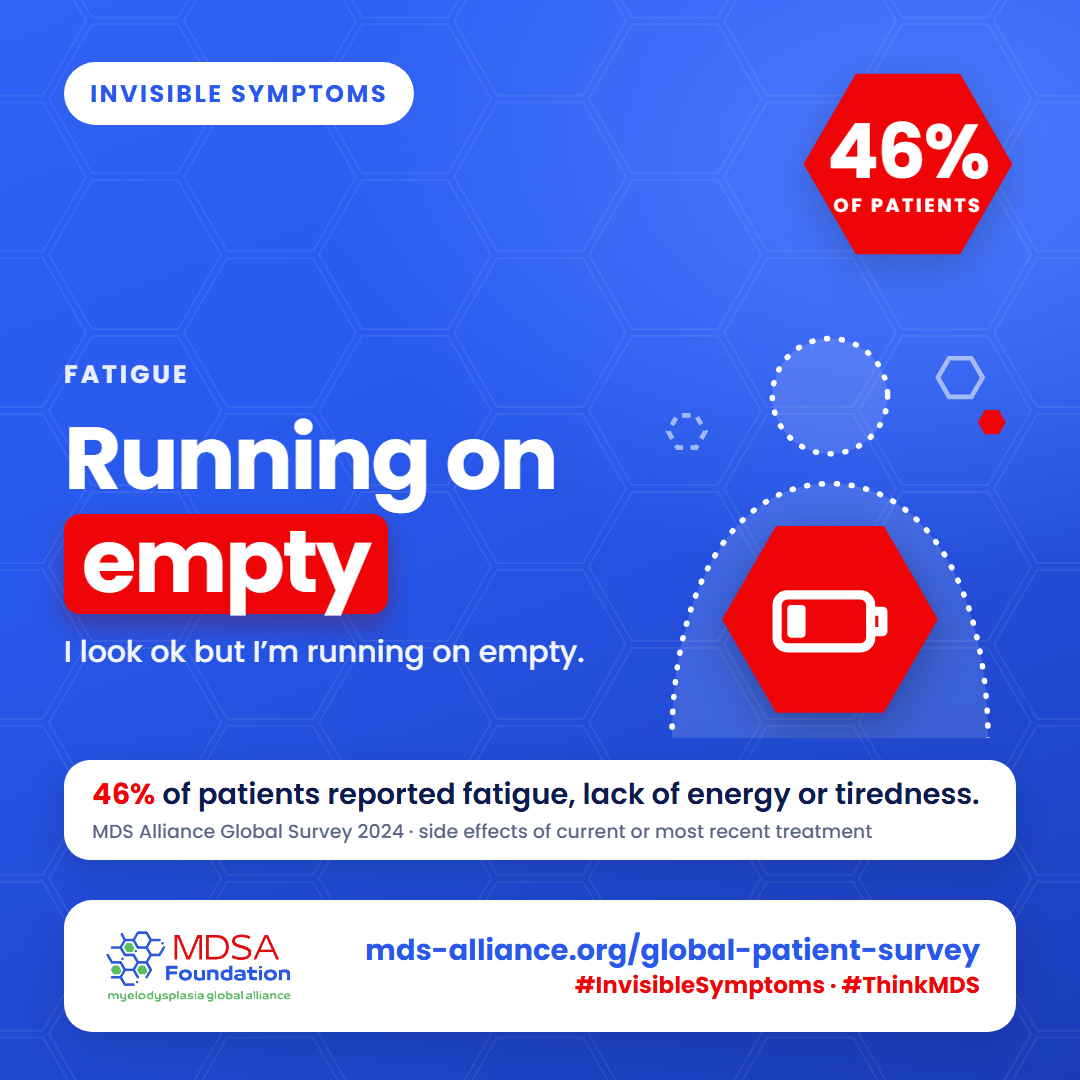
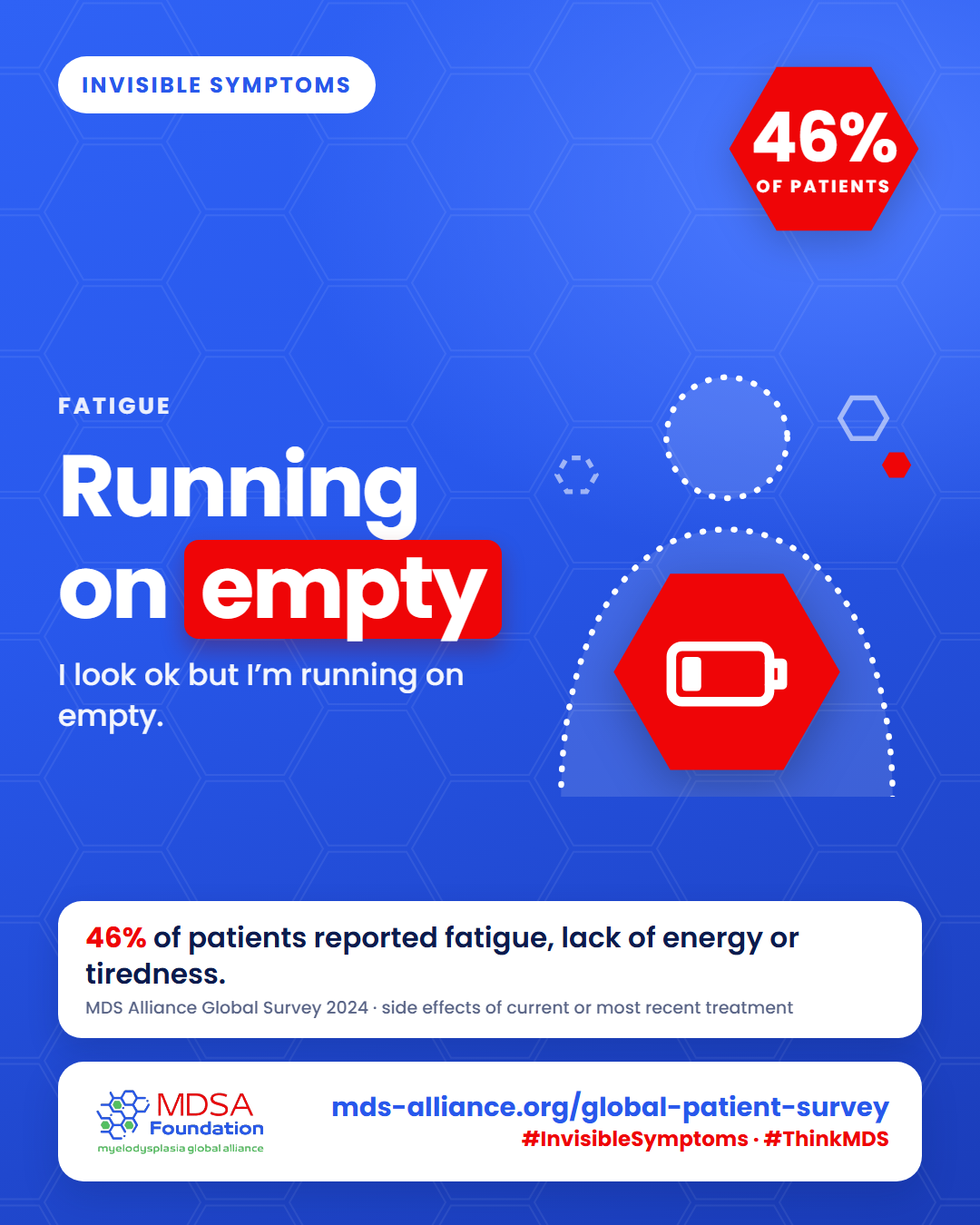
Running on empty
I look ok but I’m running on empty.
Fatigue is one of the most common and debilitating symptoms of MDS. It often goes unseen by others but can significantly affect daily activities, independence and emotional wellbeing.
Survey link: 46% of patients reported fatigue, lack of energy or tiredness as a treatment-related symptom, making it the most commonly reported symptom. Caregivers also identified fatigue as the symptom with the greatest severe impact on patients’ lives.
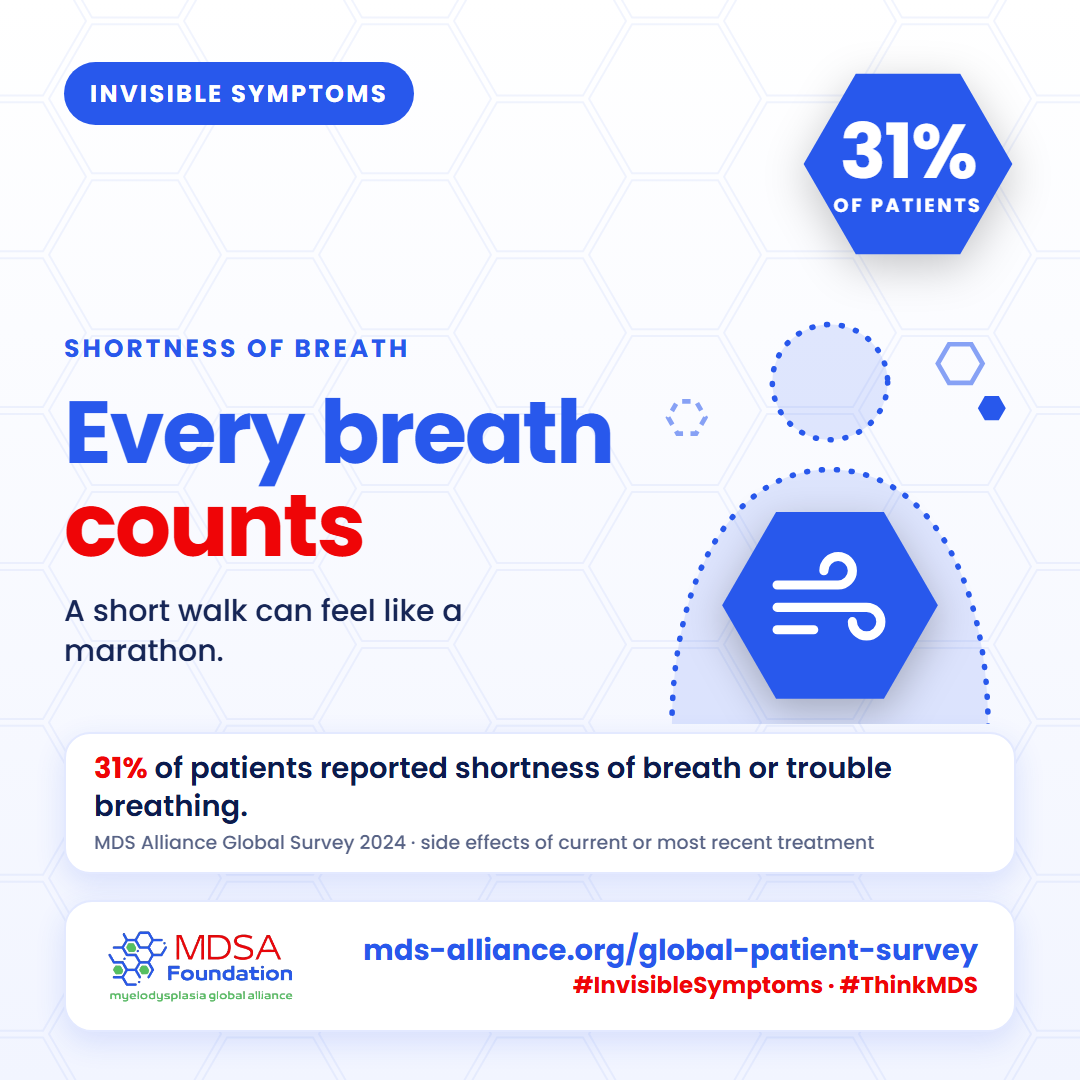
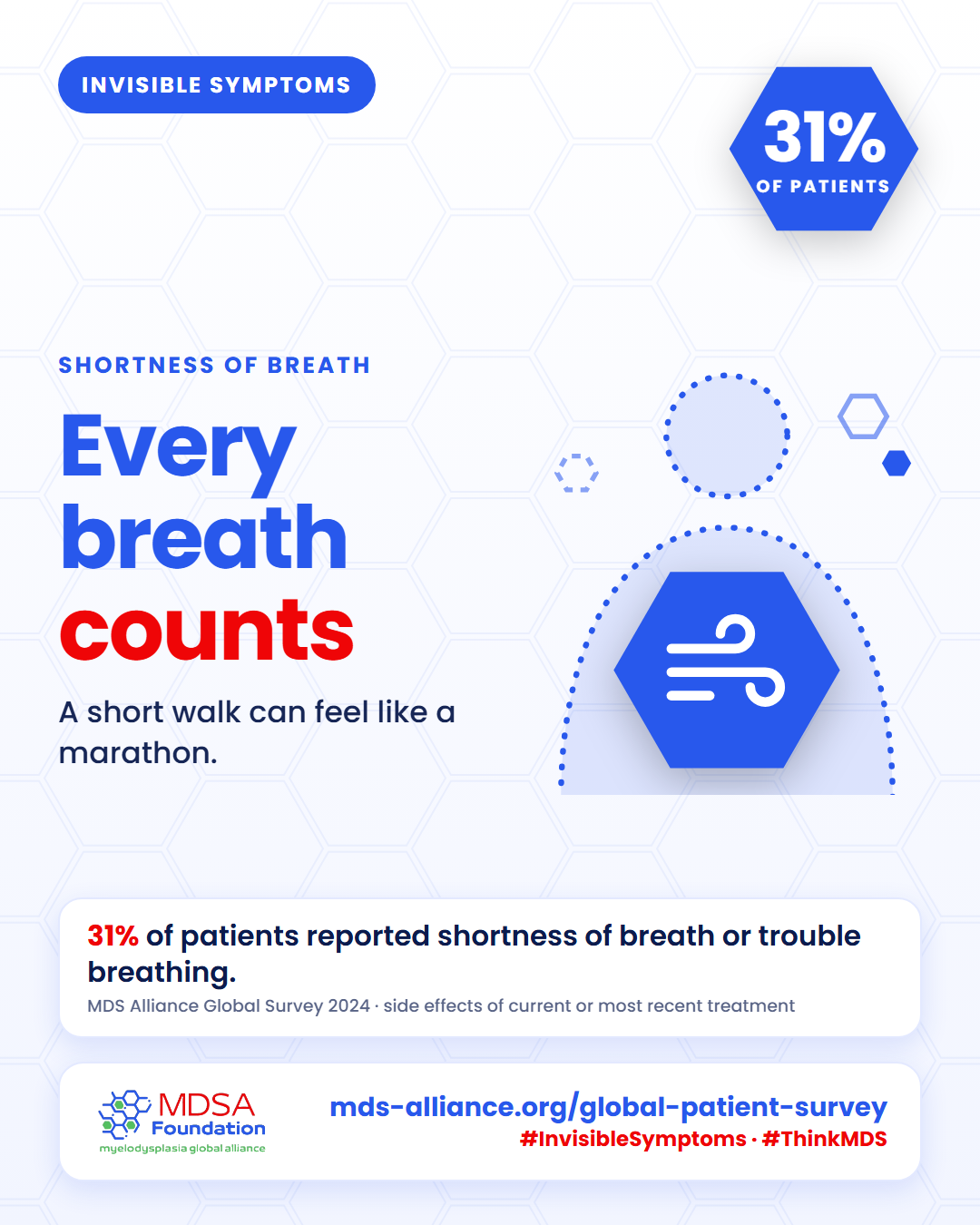
Every breath counts
A short walk can feel like a marathon.
Many people with MDS experience breathlessness even during routine tasks such as walking, climbing stairs or household activities.
Survey link: 31% of patients reported shortness of breath or trouble breathing. This symptom is often linked to low red blood cell counts and anaemia.
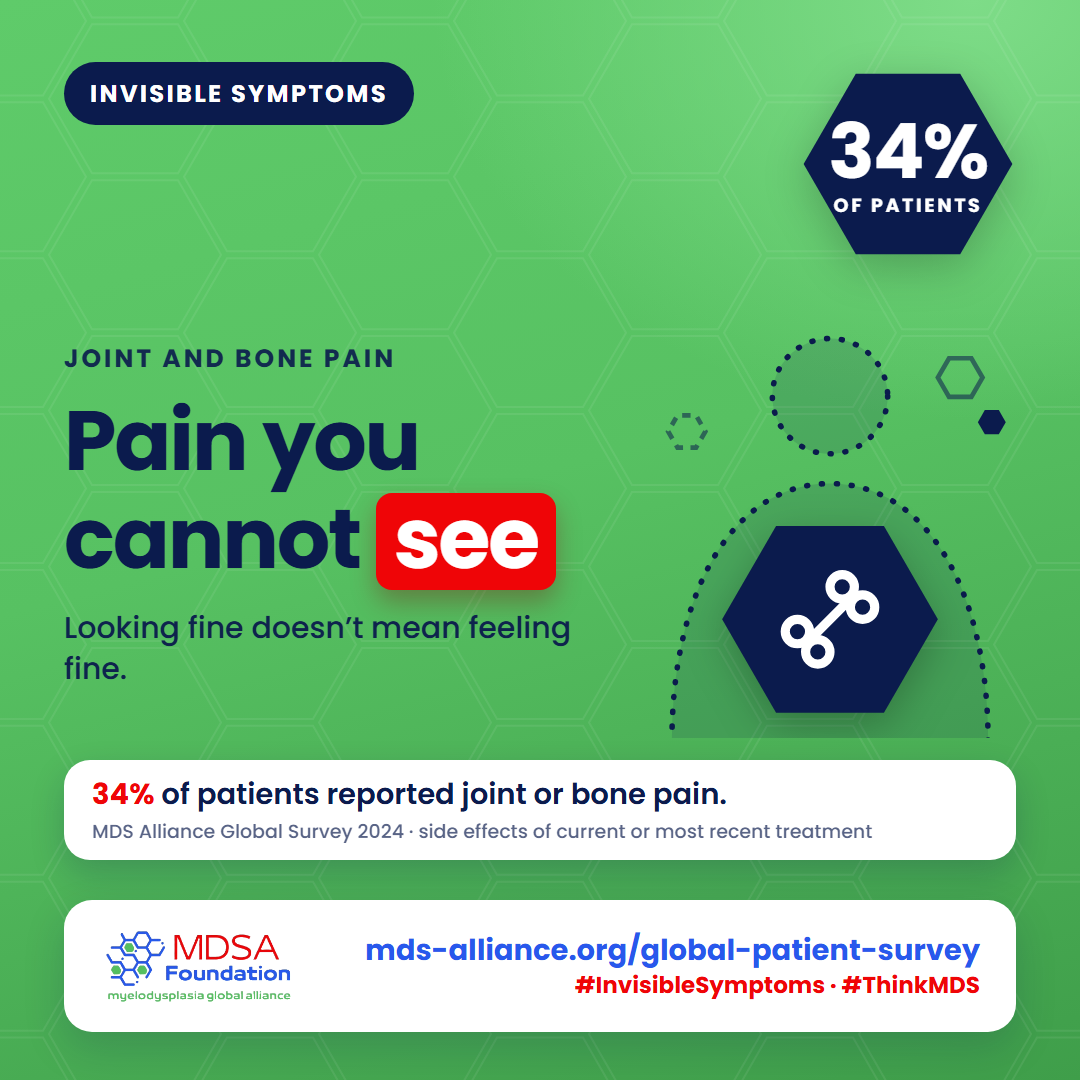
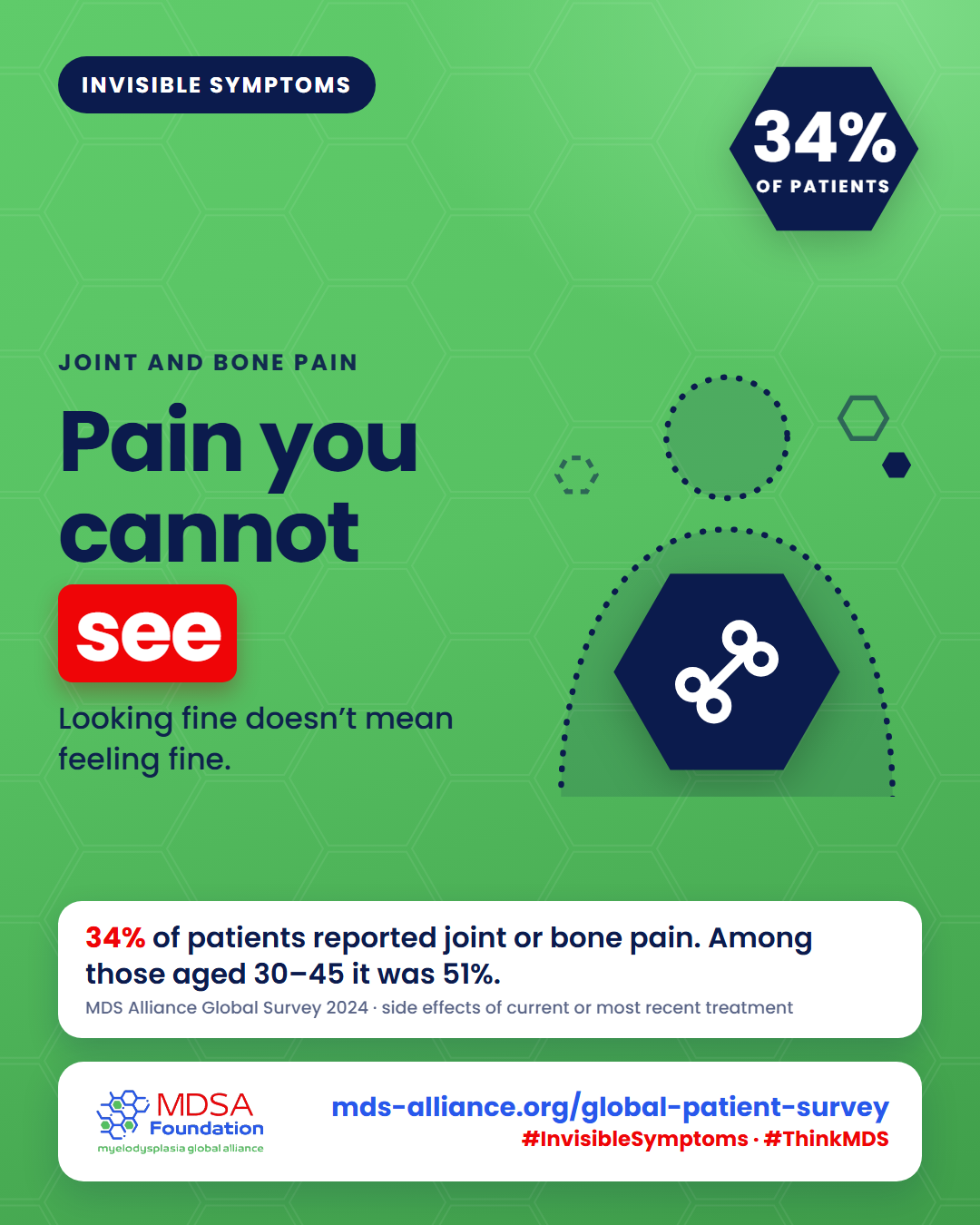
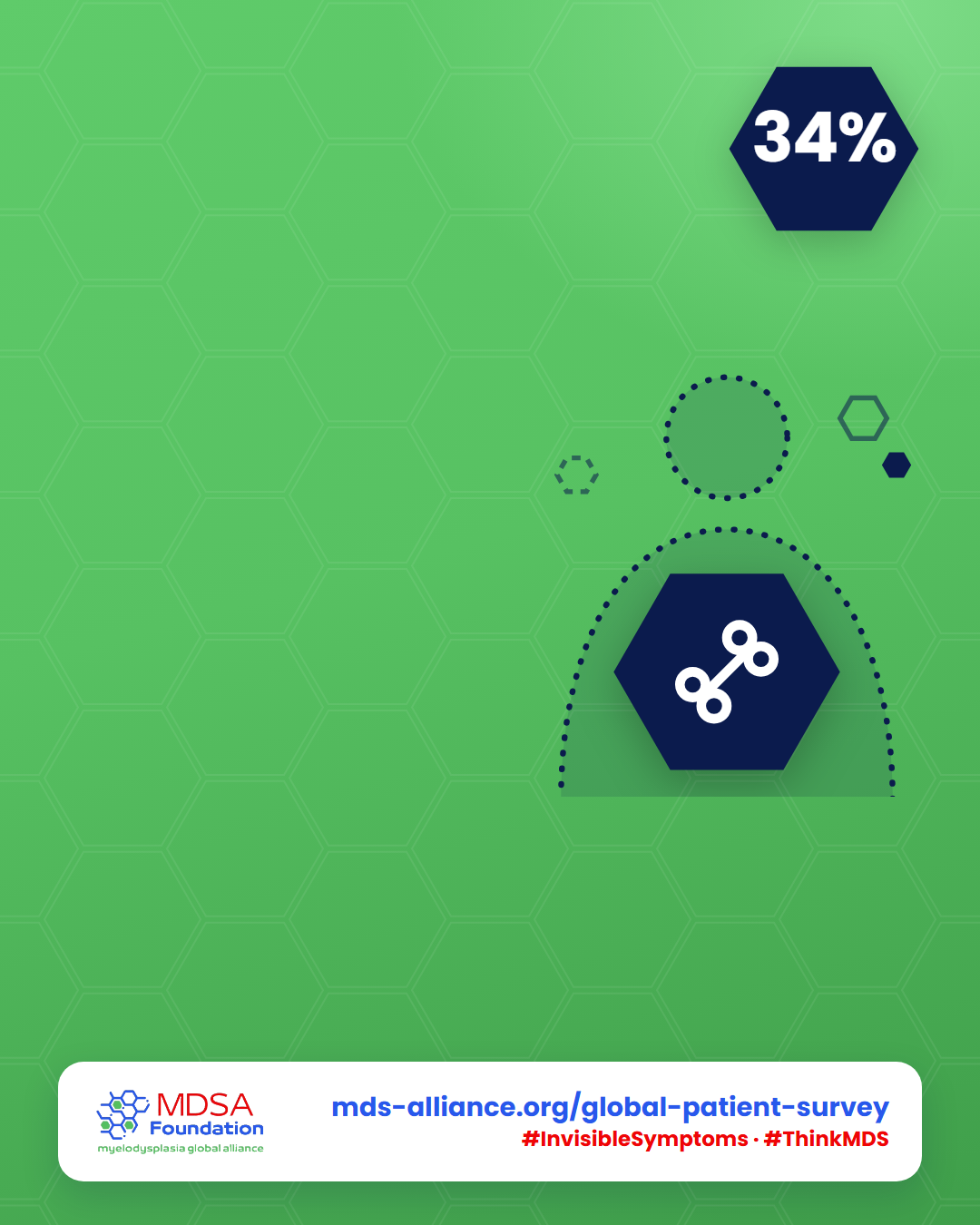
Pain you cannot see
Looking fine doesn’t mean feeling fine.
Pain in joints and bones may not be visible but can make movement difficult and reduce quality of life.
Survey link: 34% of patients experienced joint or bone pain. Among younger patients aged 30-45 years, this was 51%, highlighting a significant hidden impact on daily functioning.
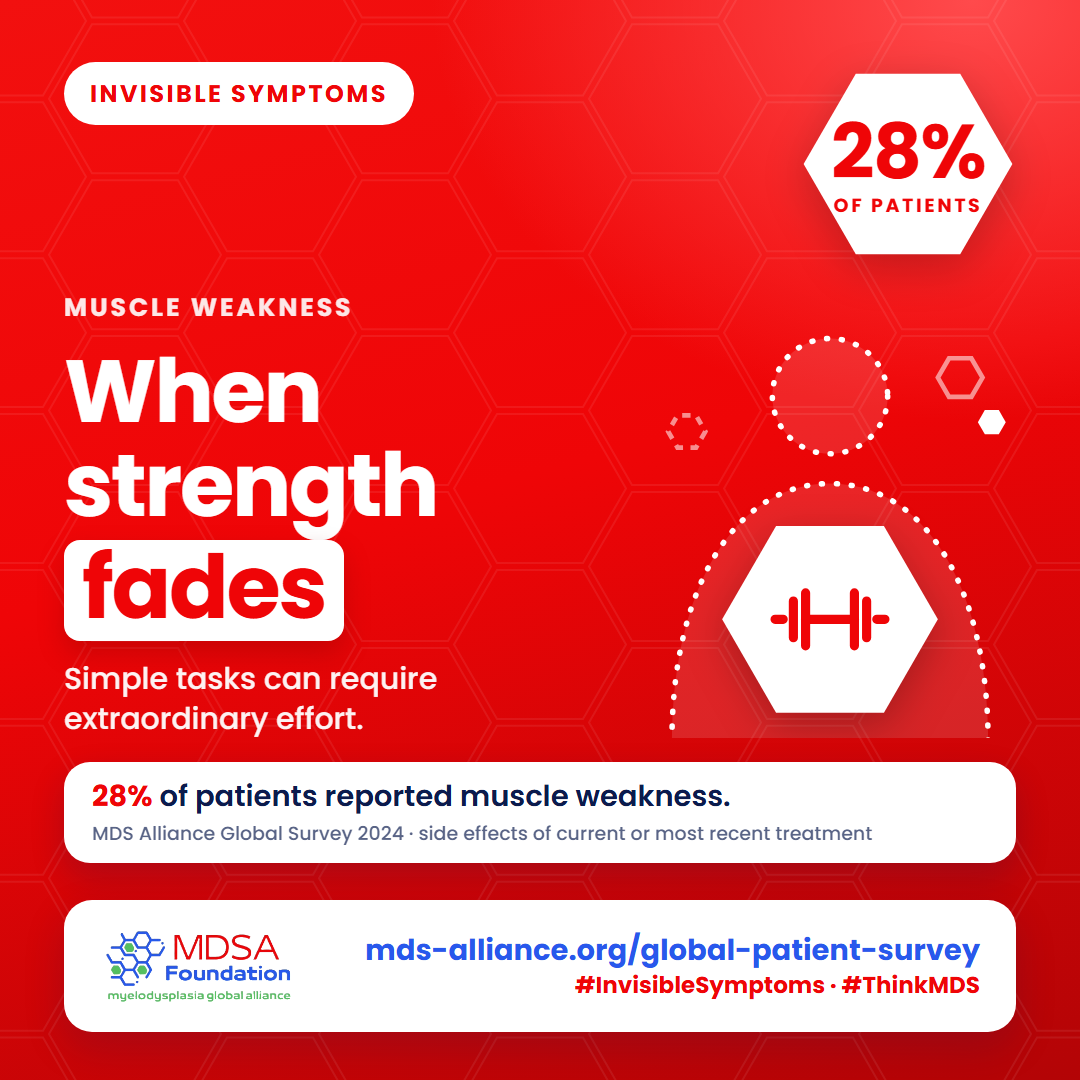
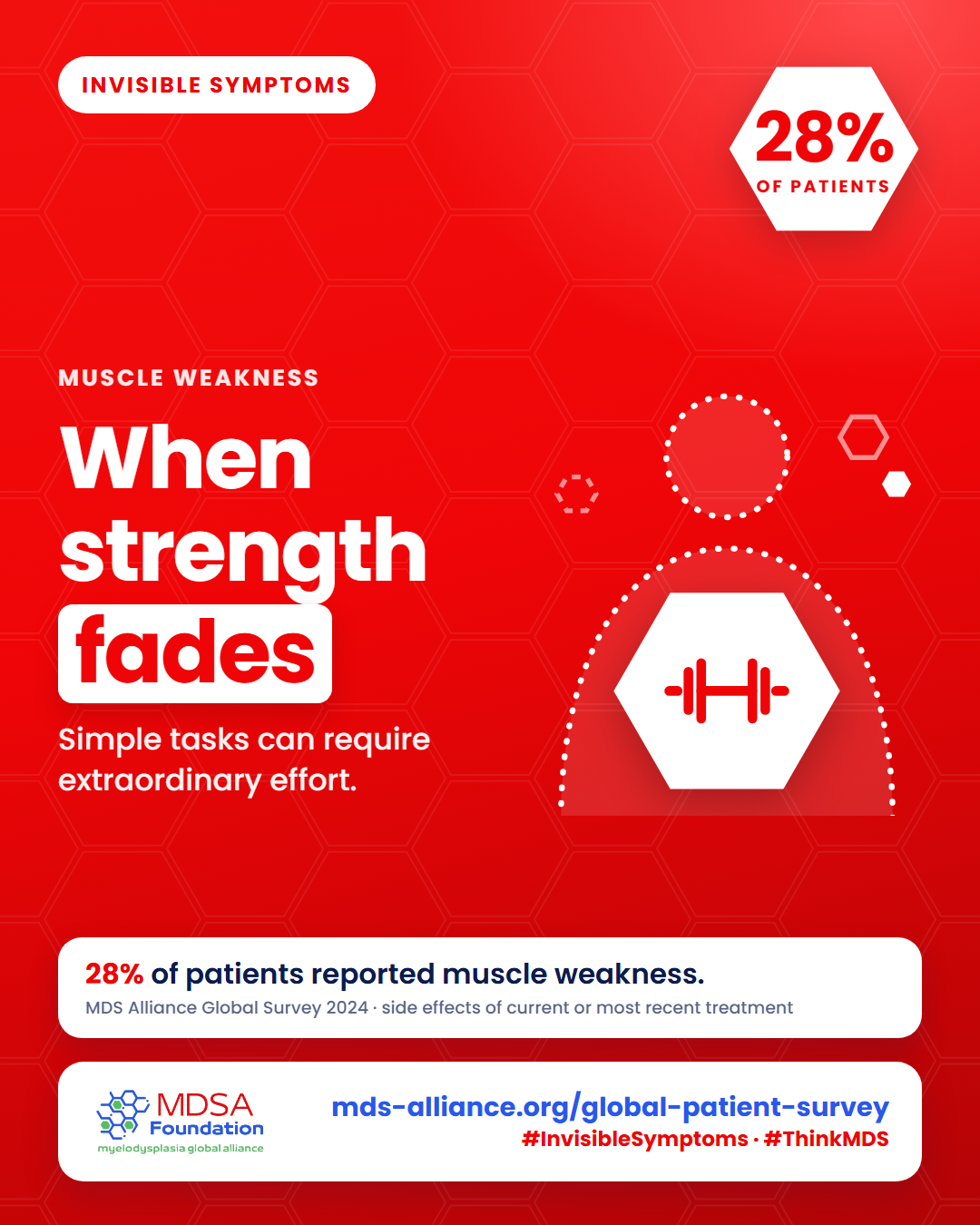
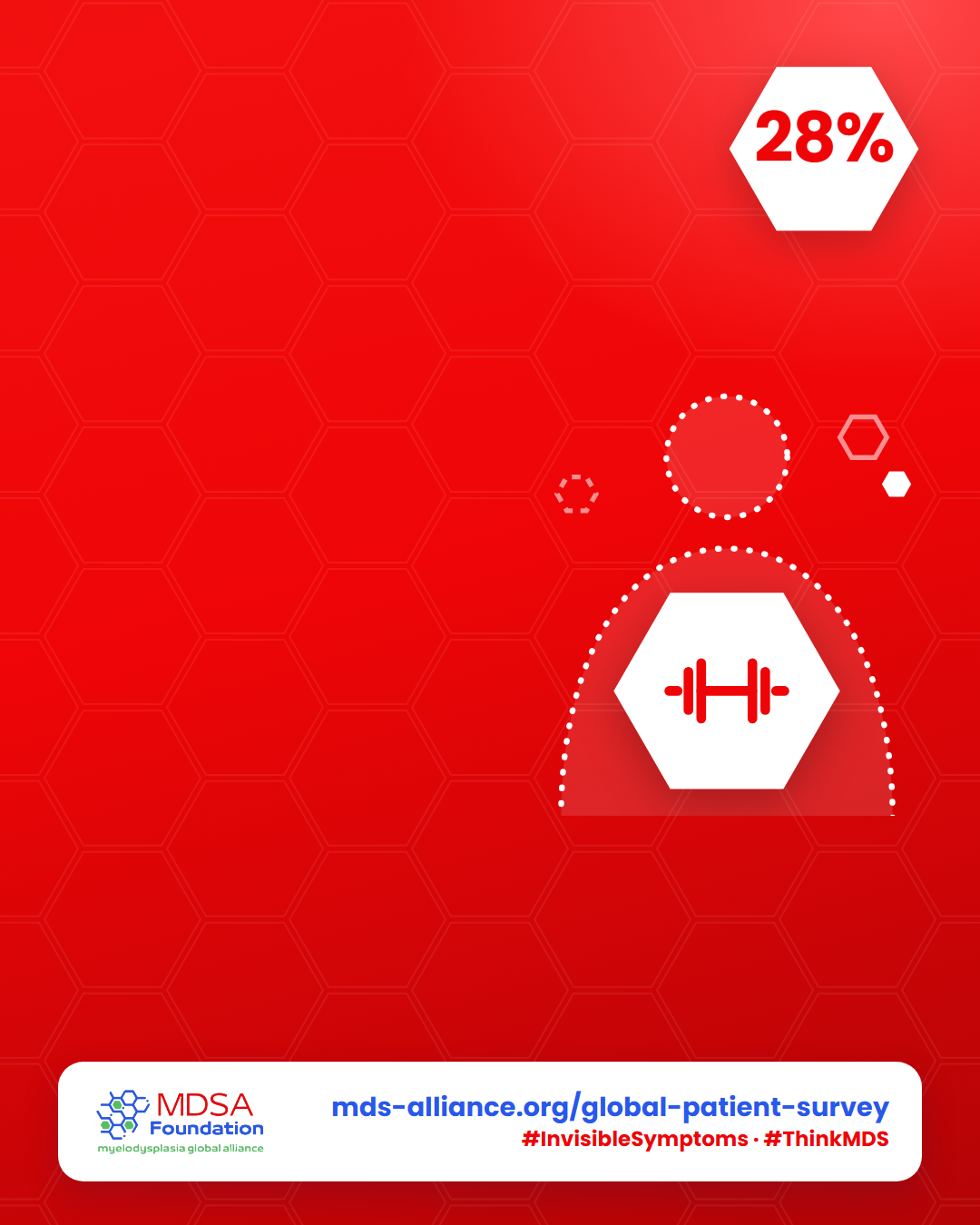
When strength fades
Simple tasks can require extraordinary effort.
Muscle weakness can limit mobility, reduce stamina and make everyday tasks exhausting.
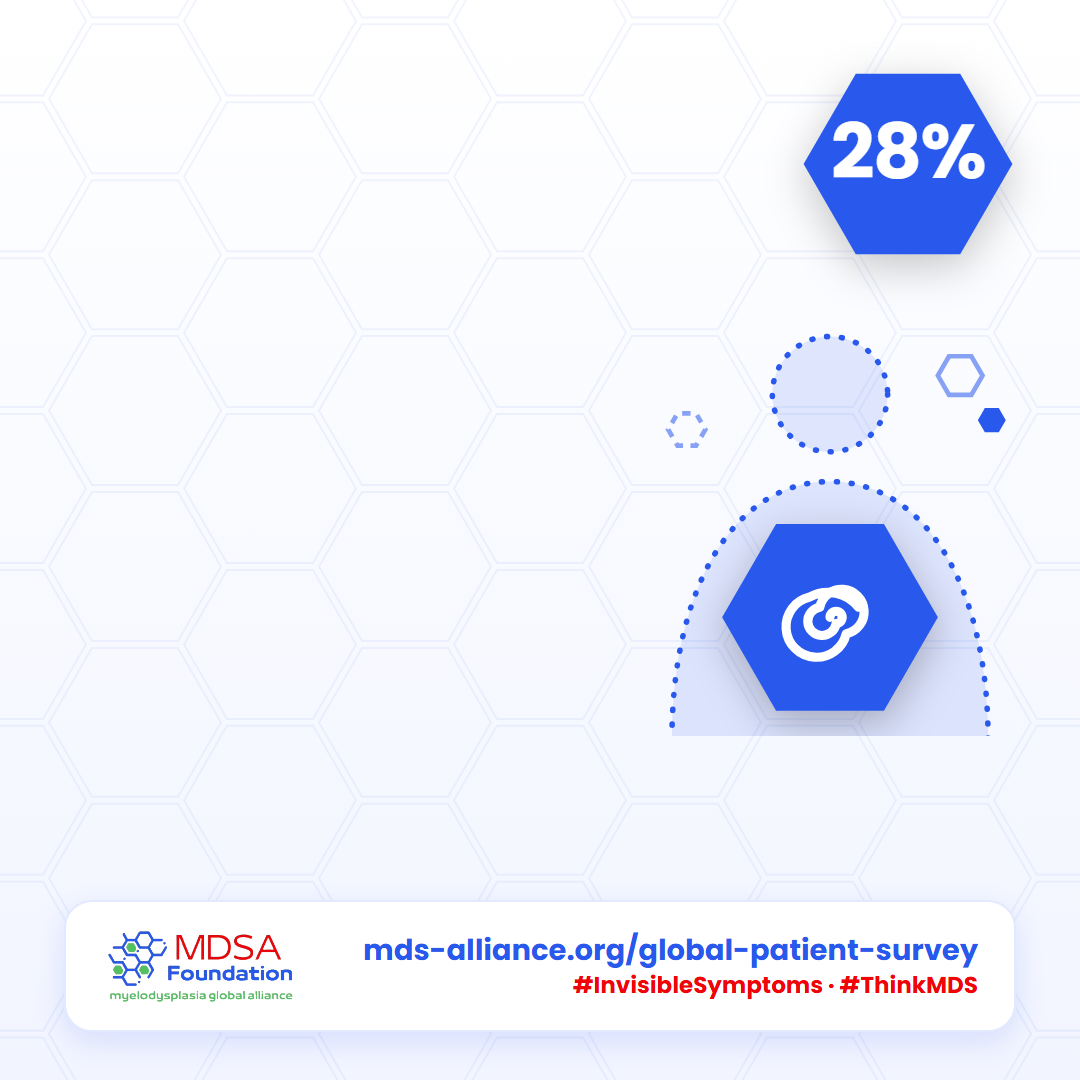
Survey link: 28% of patients reported muscle weakness as an ongoing symptom impacting their wellbeing and independence.
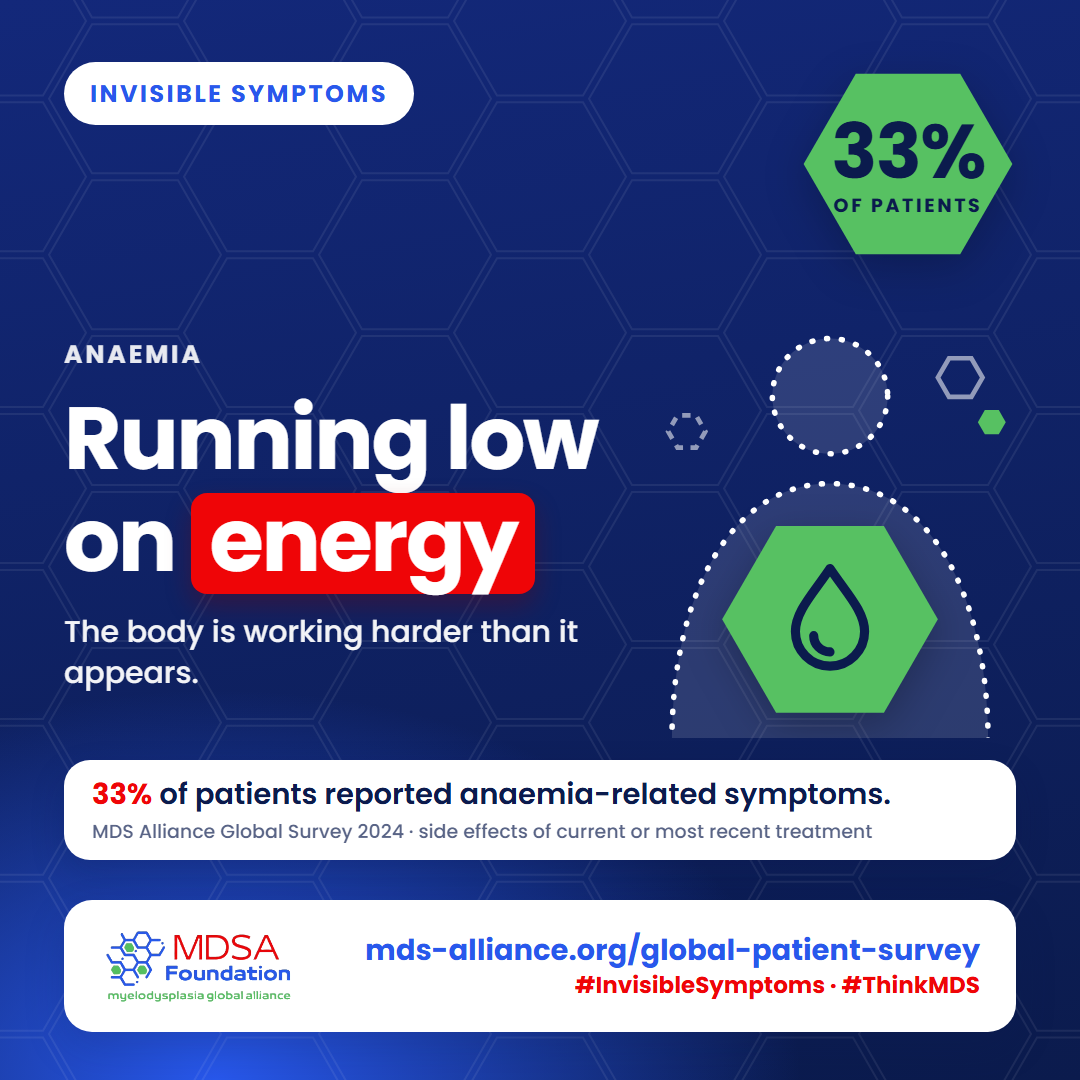
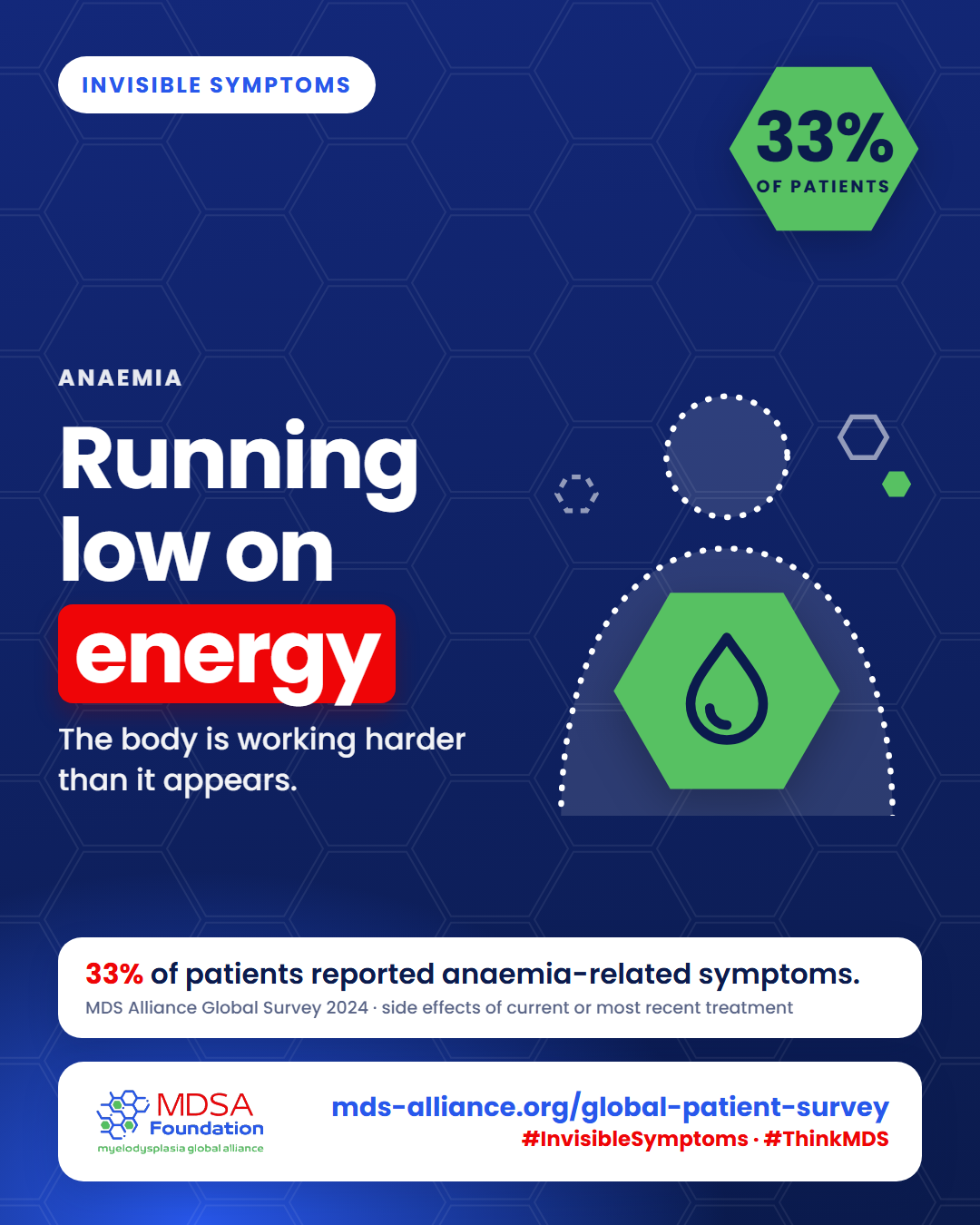
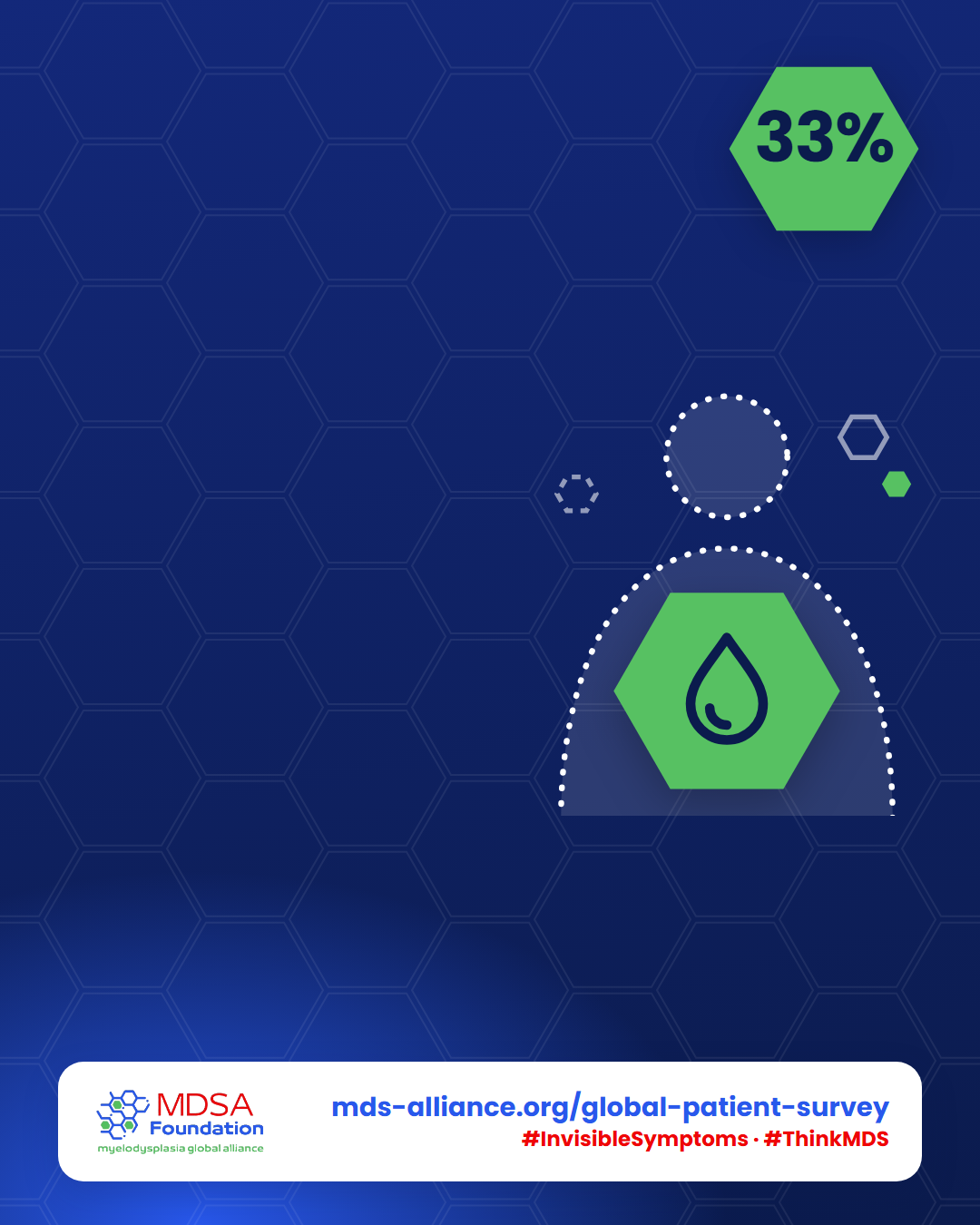
Running low on energy
The body is working harder than it appears.
Anaemia often causes profound exhaustion, dizziness and reduced physical capacity, even though patients may appear well externally.
Survey link: 33% of patients reported anaemia-related symptoms. Caregivers also ranked anaemia among the symptoms having the most severe impact on patients’ lives.
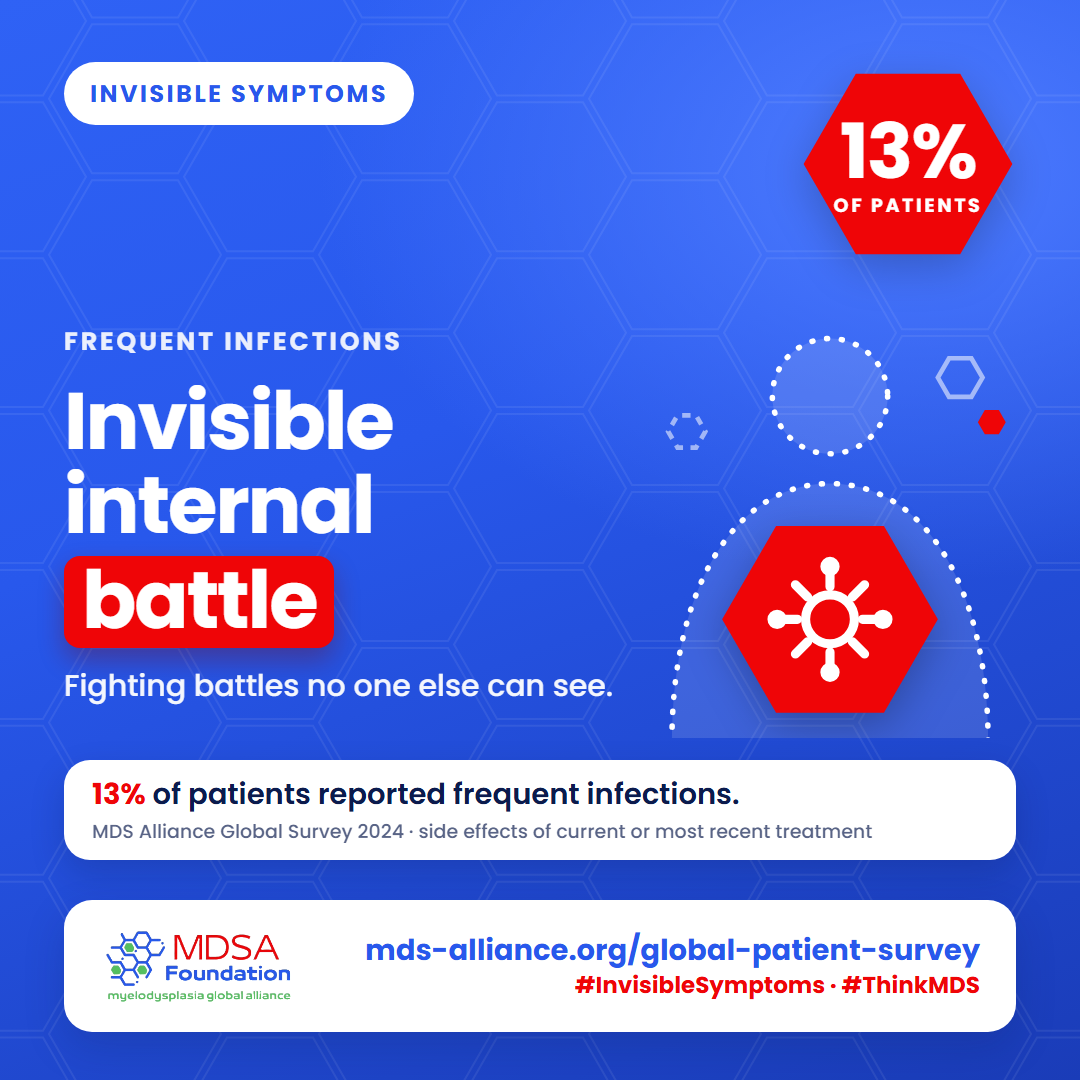
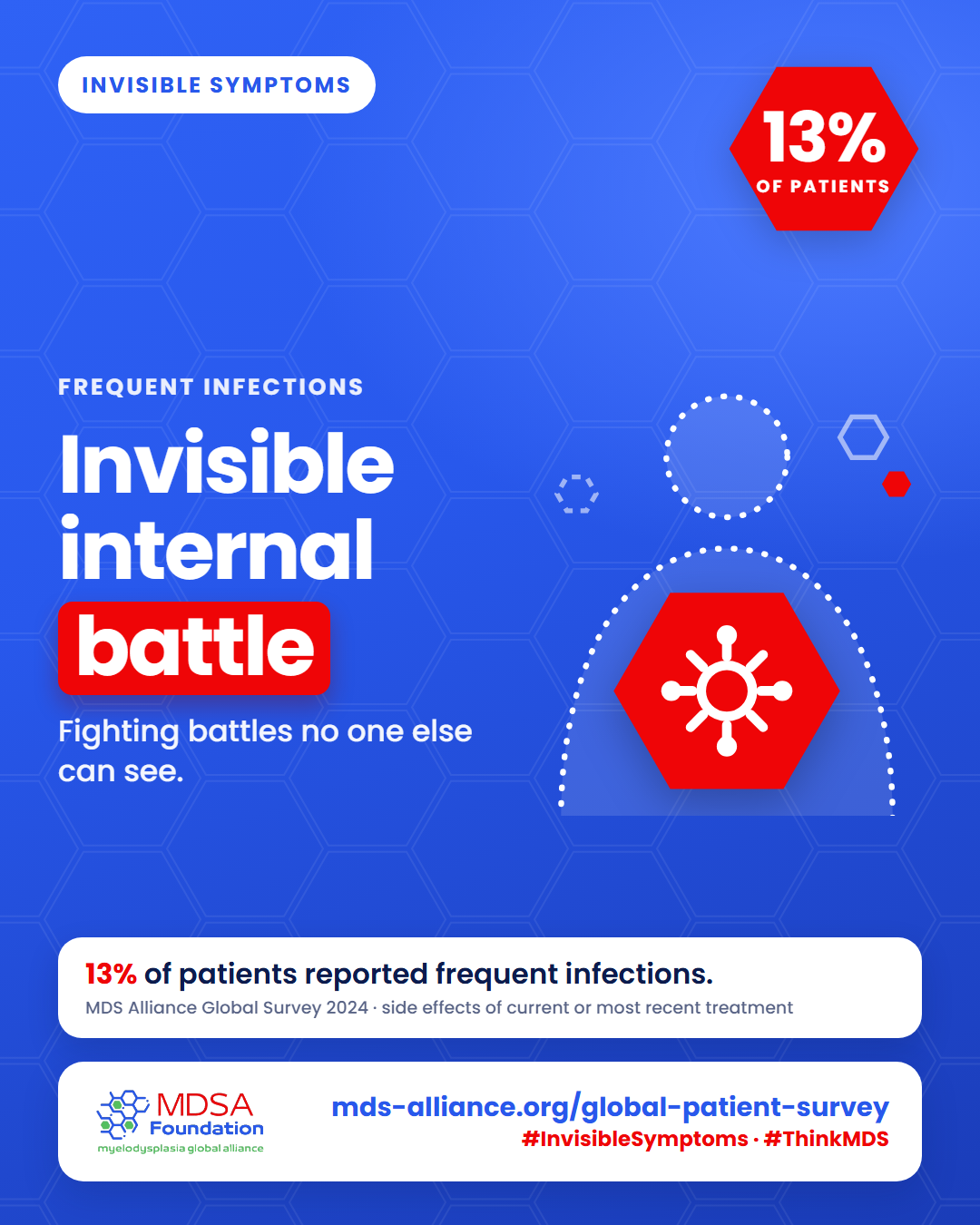
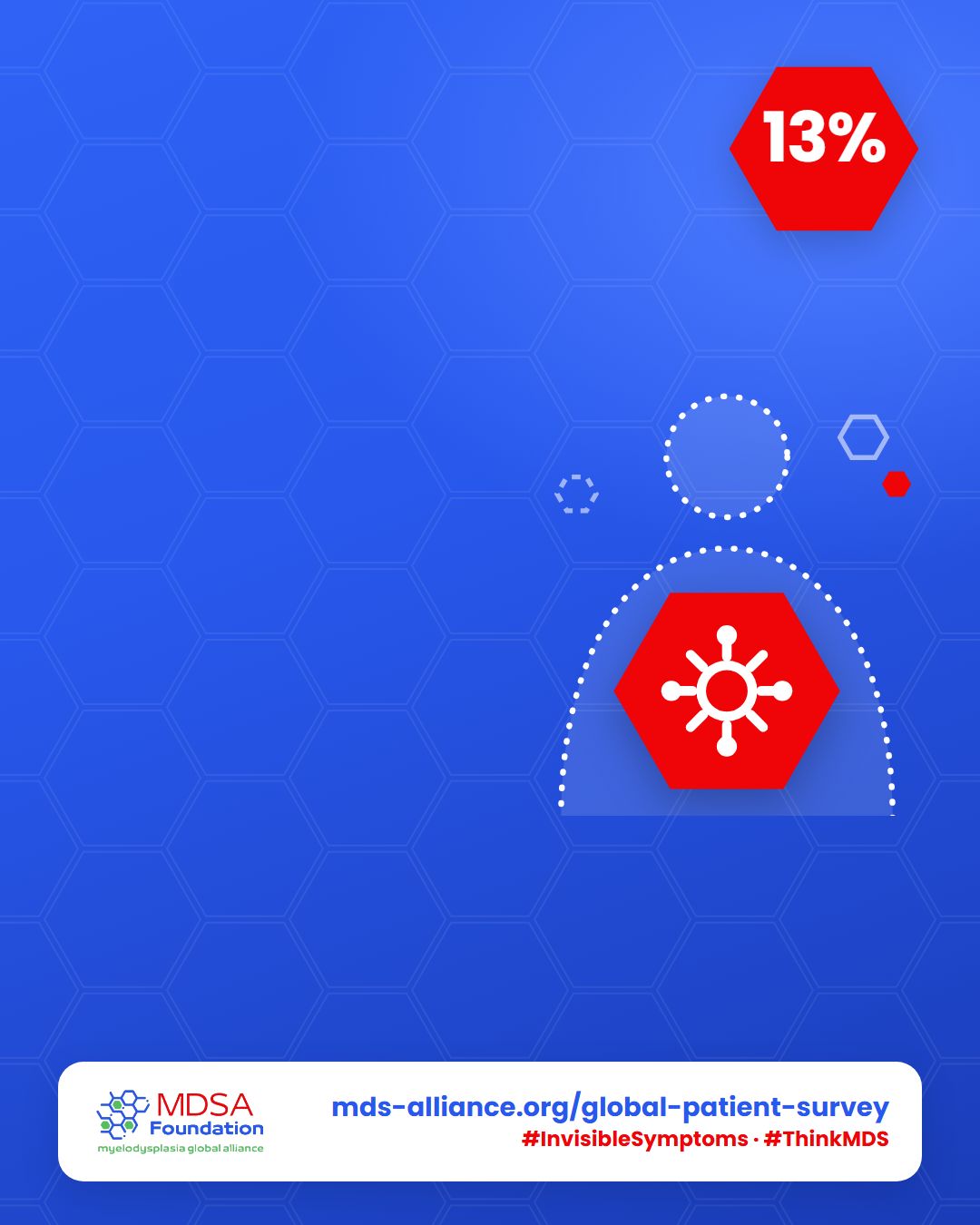
Invisible internal battle
Fighting battles no one else can see.
MDS can weaken the immune system, increasing susceptibility to infections that may not be obvious to others.
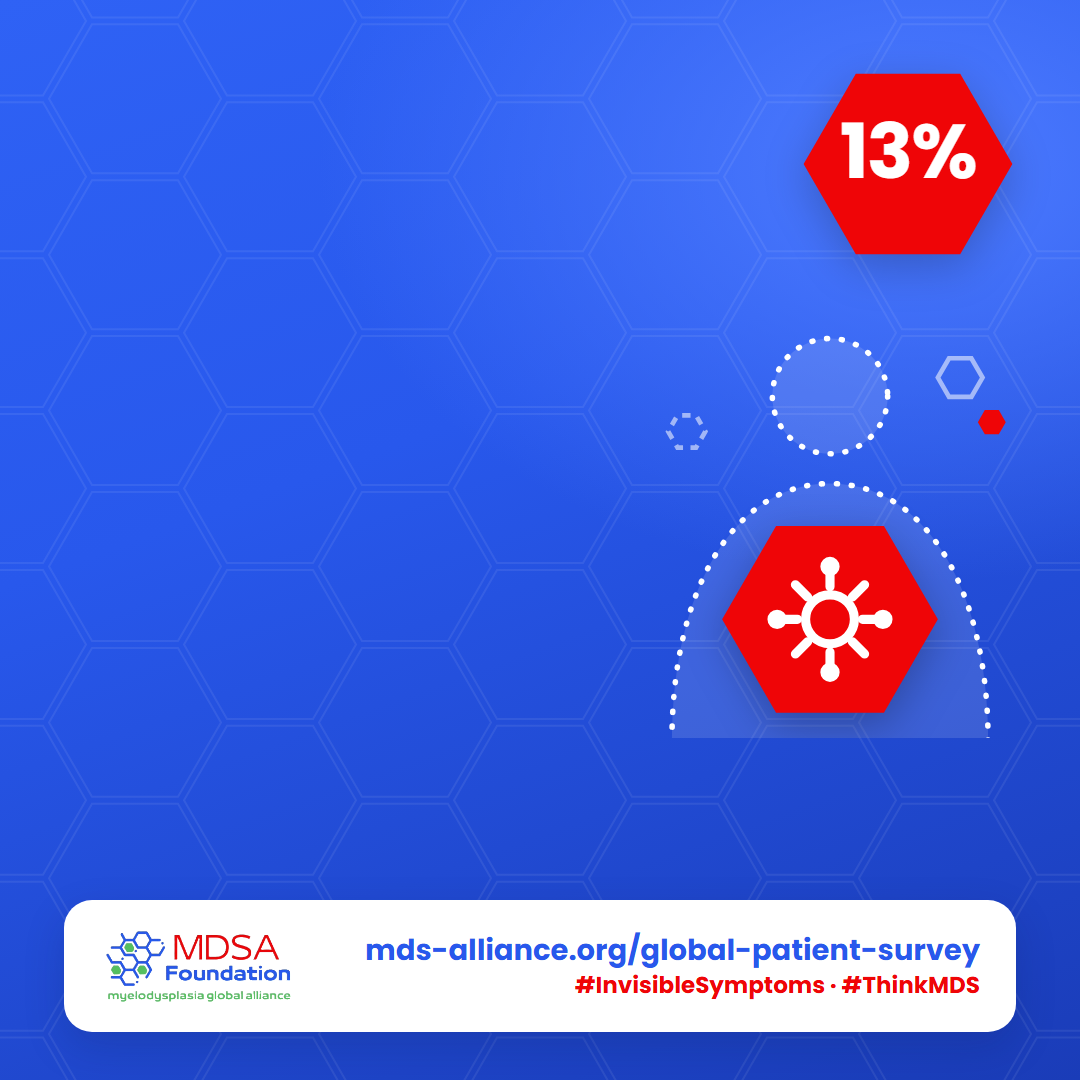
Survey link: 13% of patients reported frequent infections, reflecting the underlying bone marrow dysfunction associated with MDS.
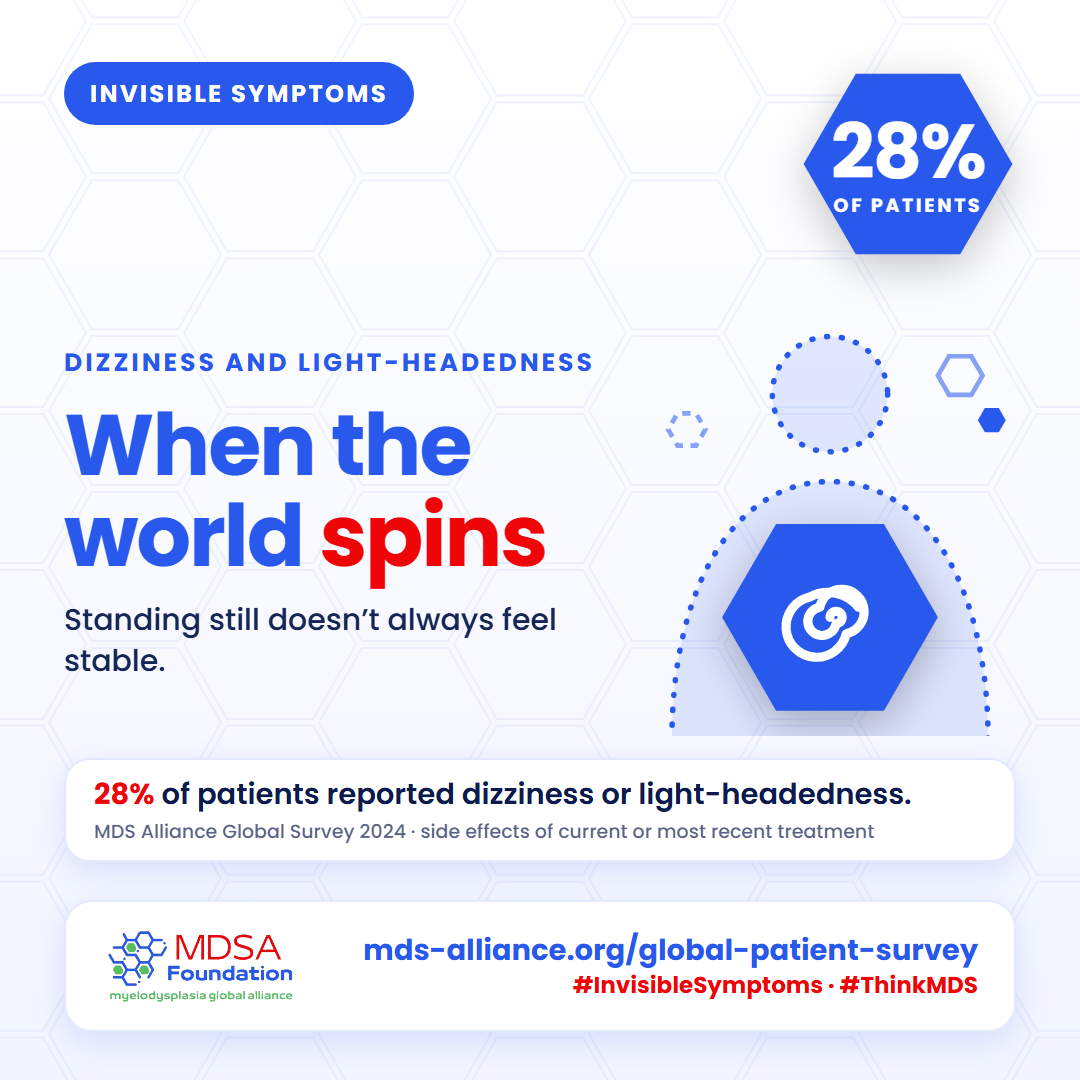
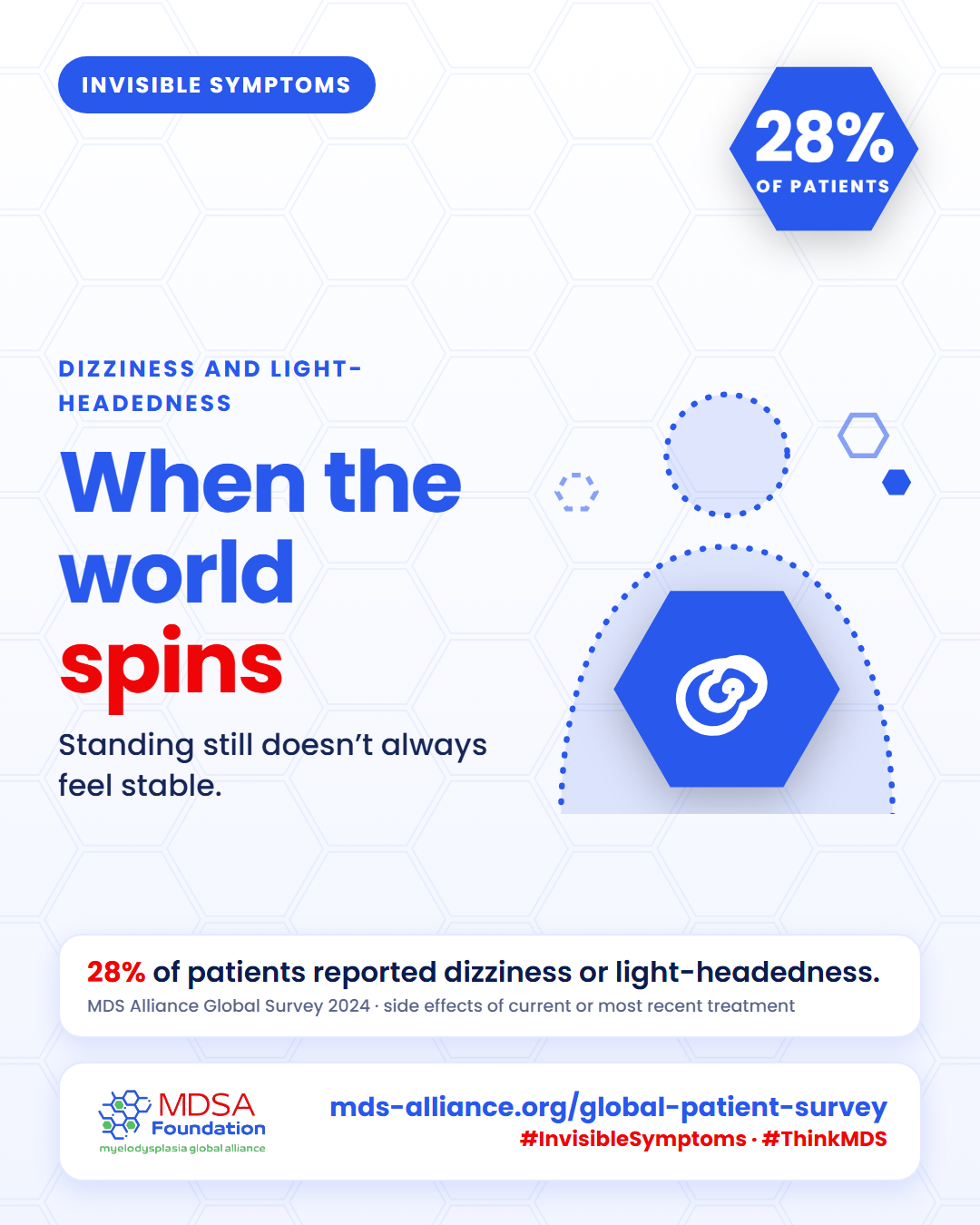
When the world spins
Standing still doesn’t always feel stable.
Patients may experience balance problems, dizziness or feeling faint, affecting confidence and safety.
Survey link: 28% of patients reported dizziness or light-headedness, a symptom often associated with low blood counts and anaemia.
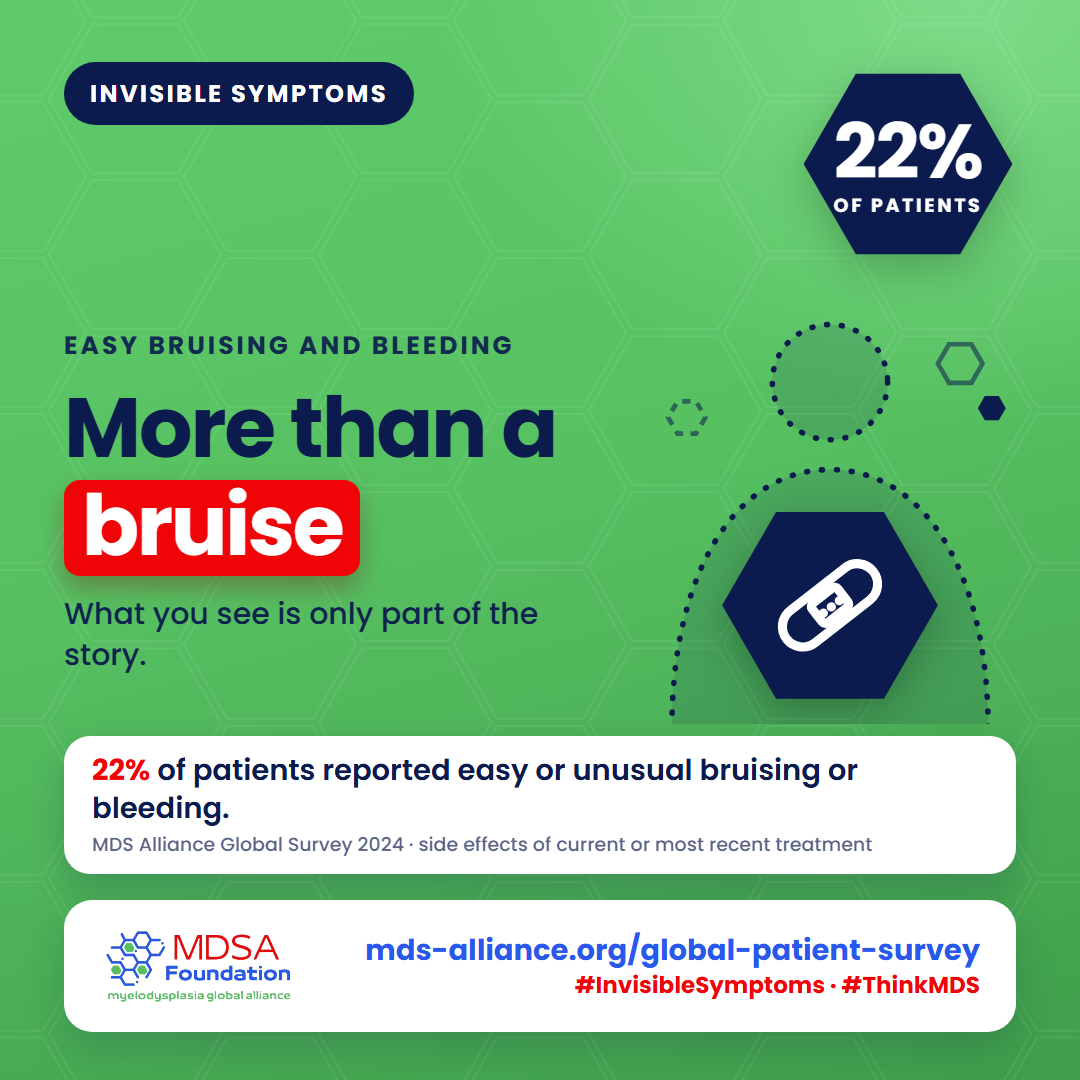
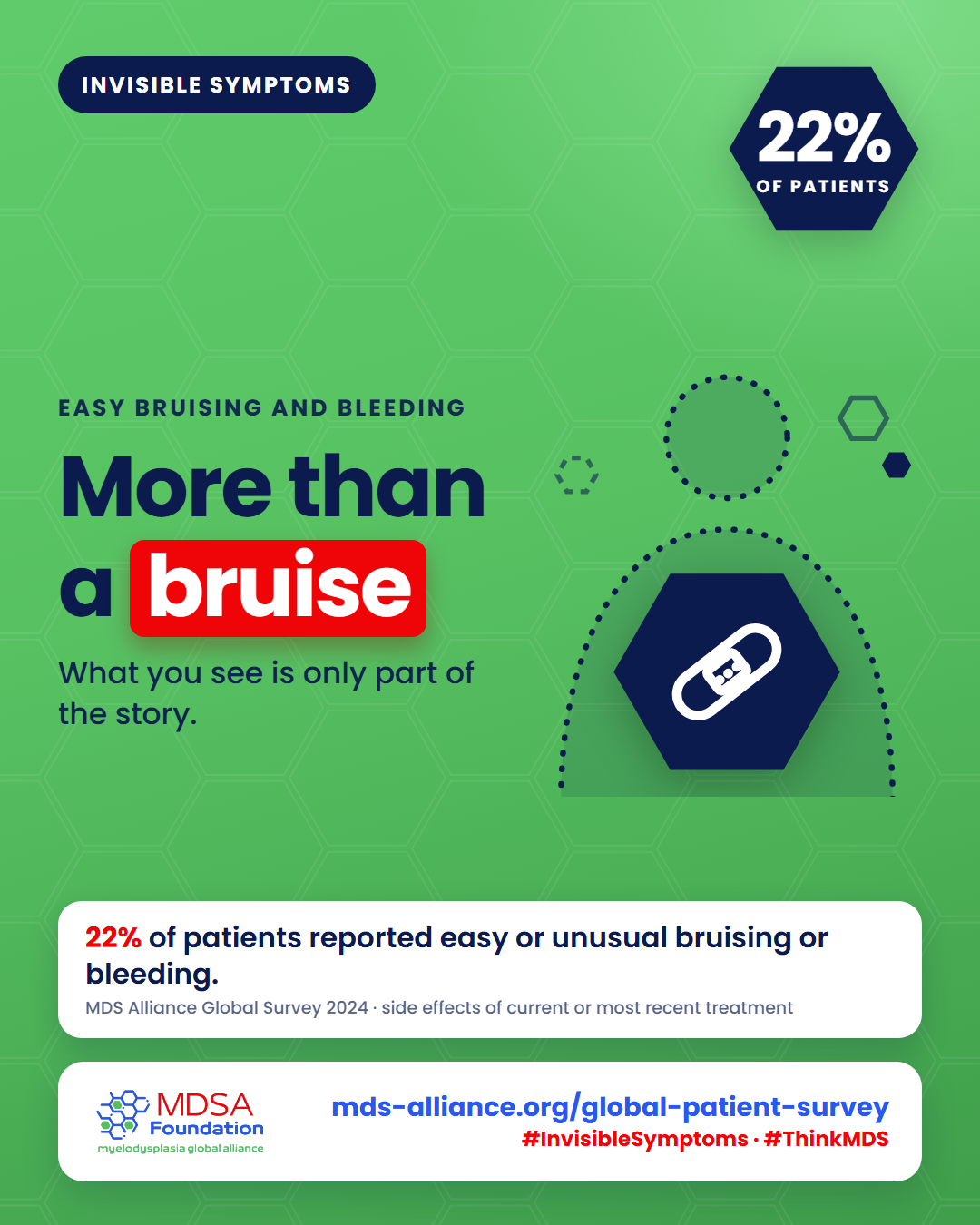
More than a bruise
What you see is only part of the story.
Although bruises may occasionally be visible, the underlying risk of bleeding is often hidden and can cause significant anxiety.
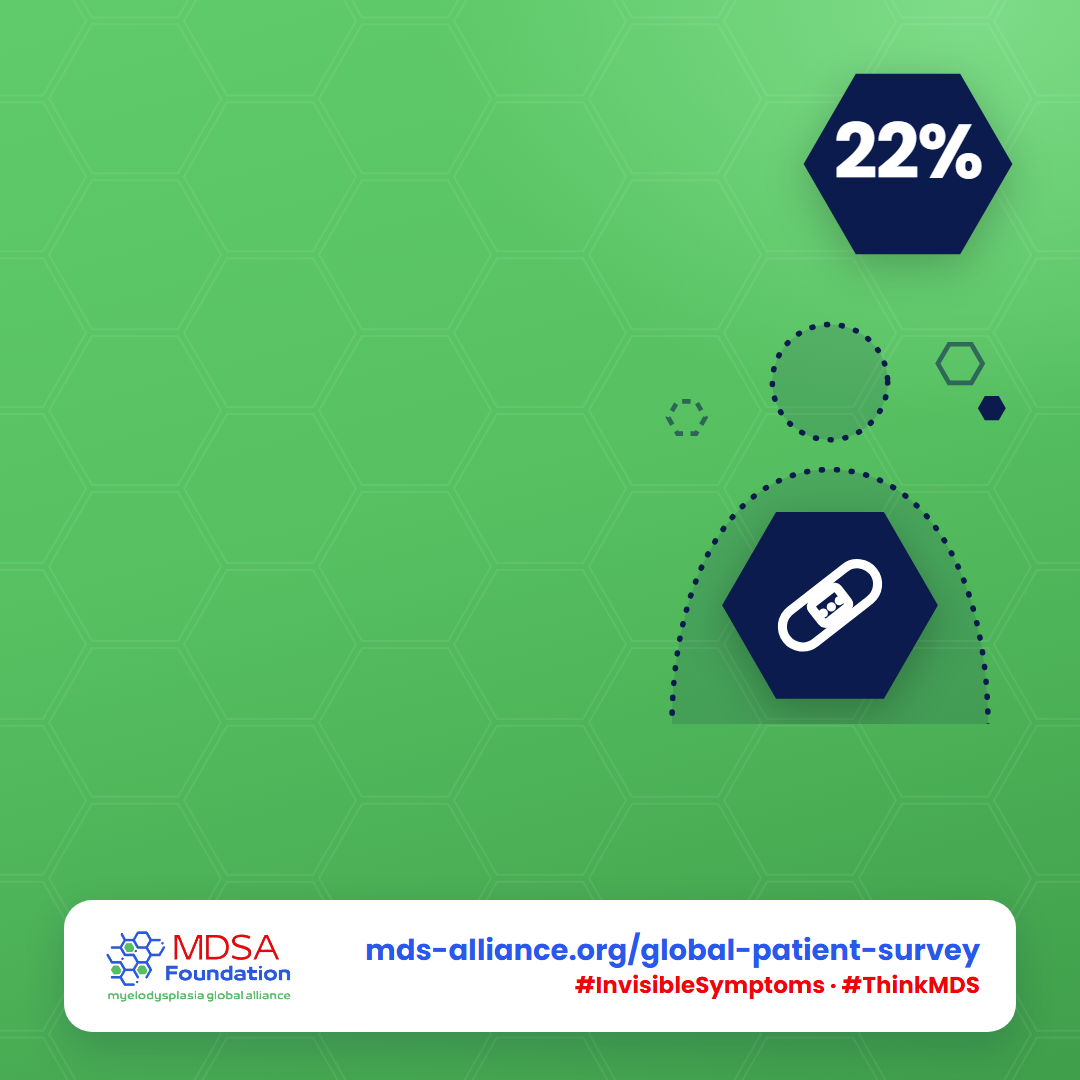
Survey link: 22% of patients reported easy or unusual bruising or bleeding related to their condition or treatment.
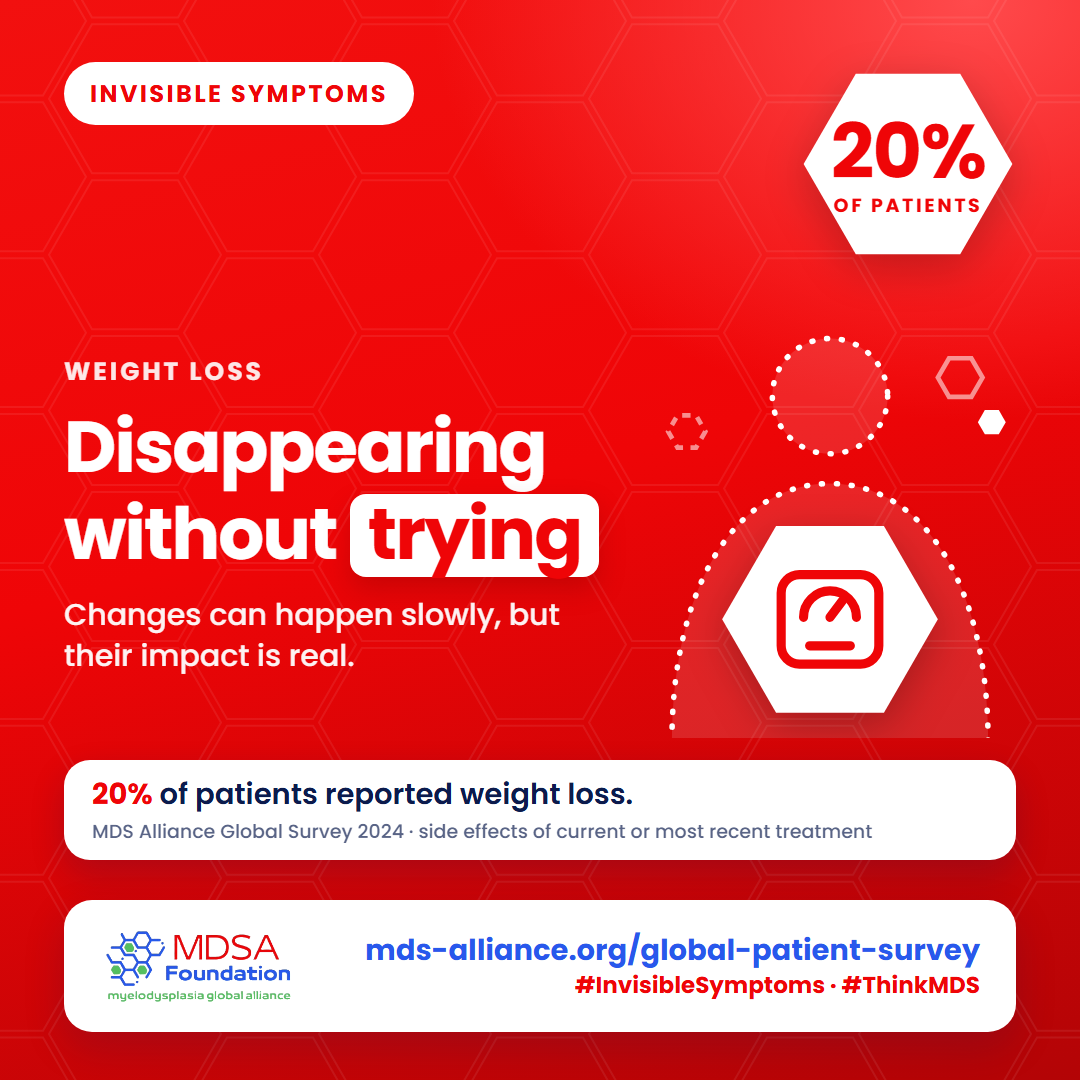
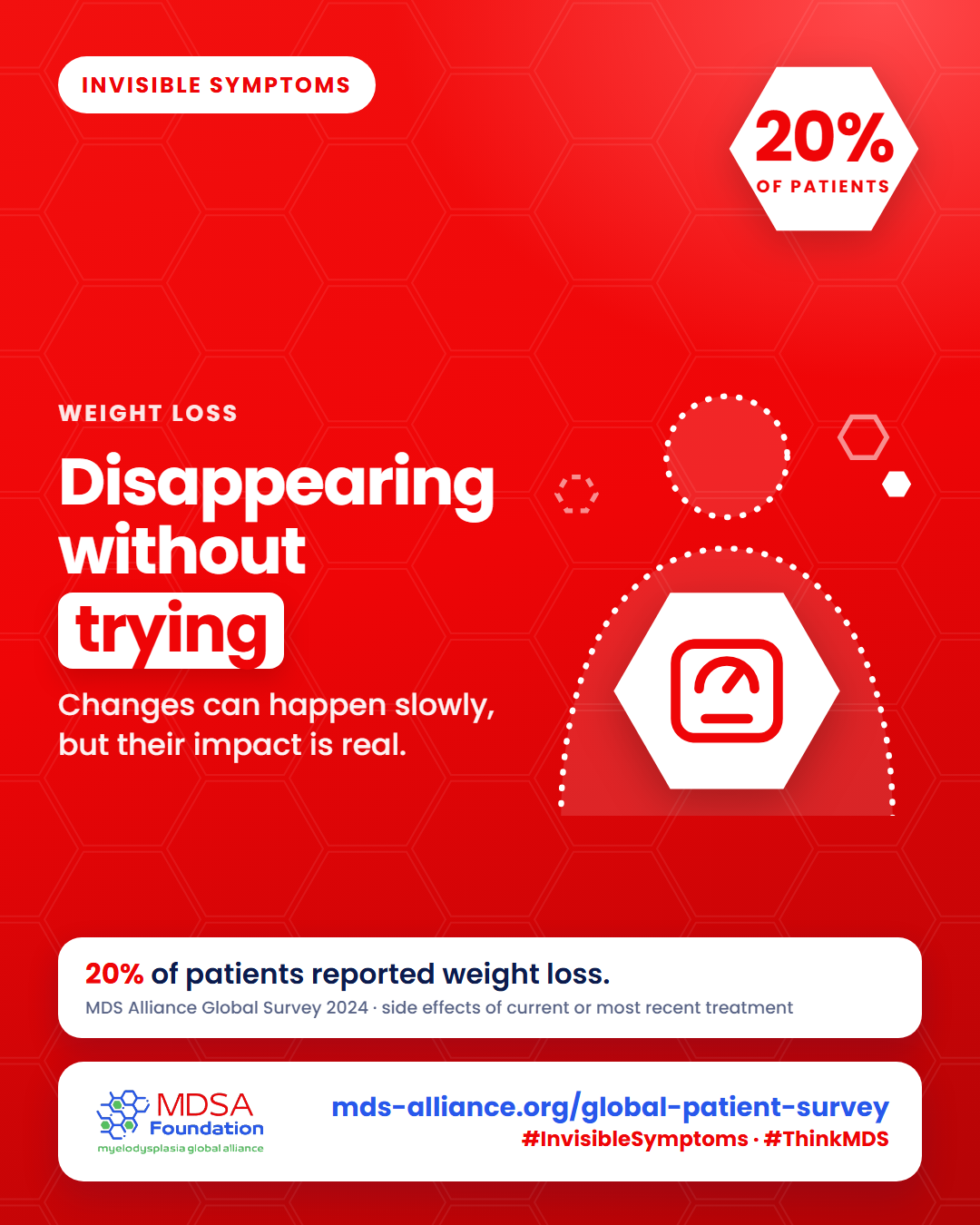
Disappearing without trying
Changes can happen slowly, but their impact is real.
Unintentional weight loss can occur gradually and may reflect the body’s increased demands from chronic disease.
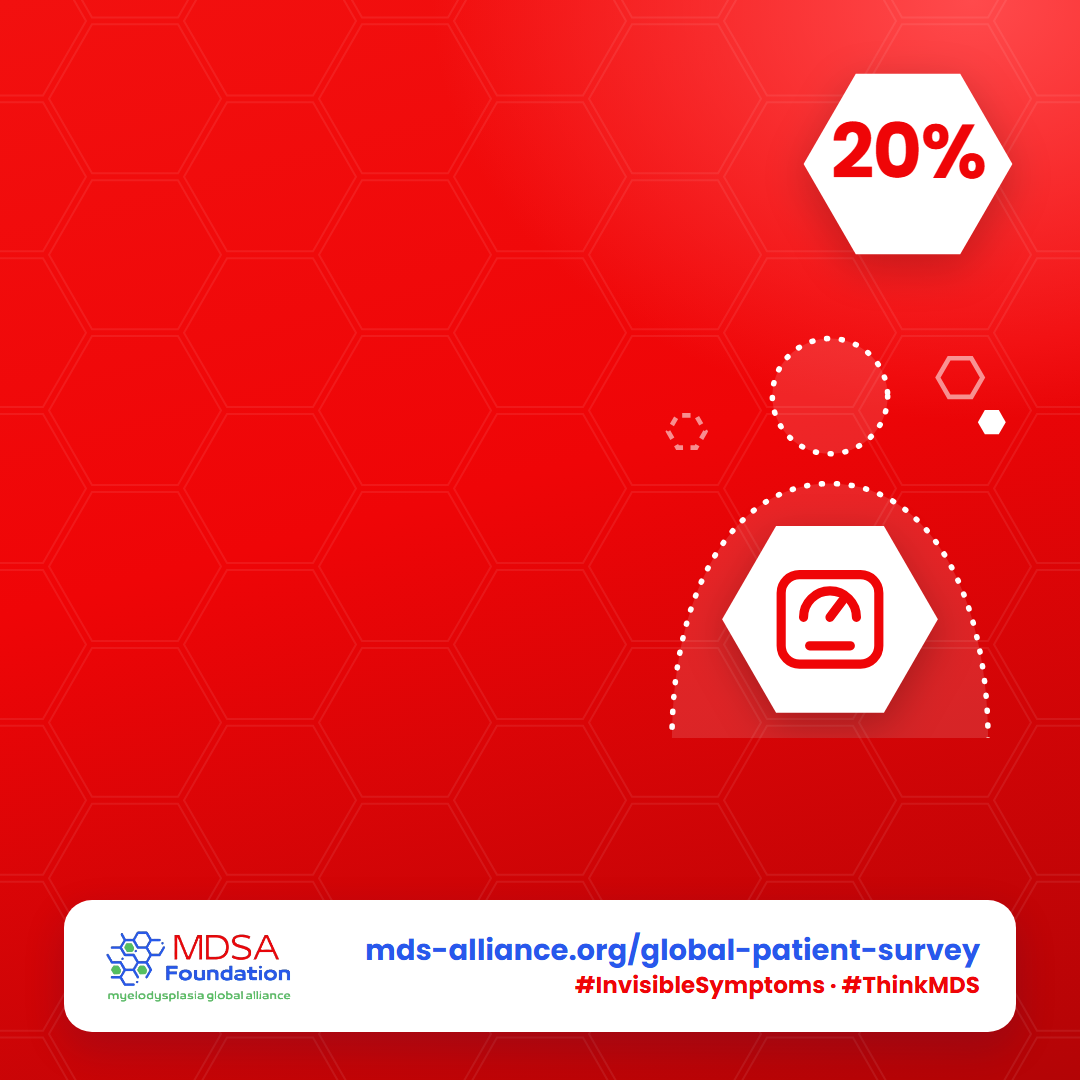
Survey link: 20% of patients reported weight loss, while caregivers identified weight loss as one of the symptoms with the most severe impact on patients’ quality of life.
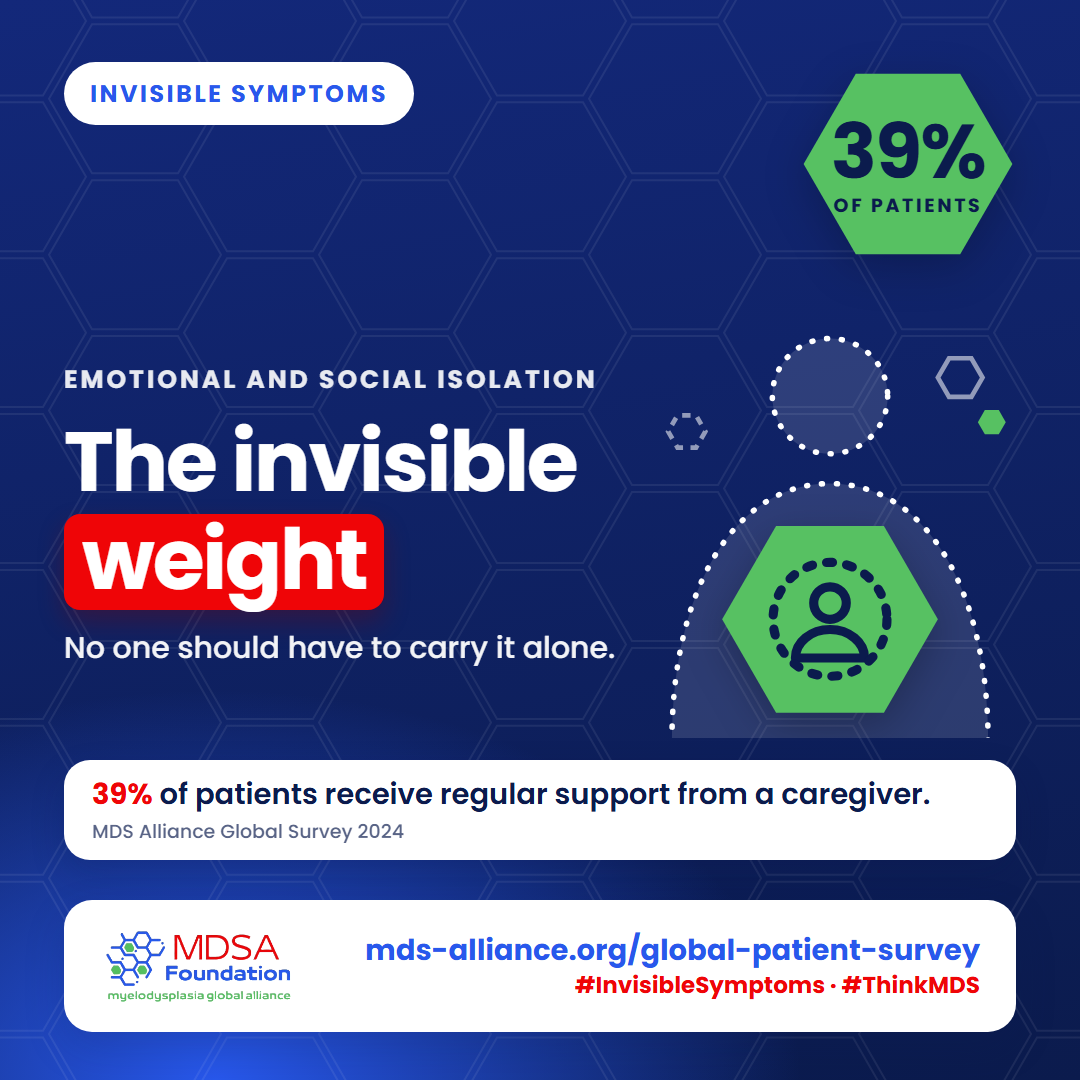
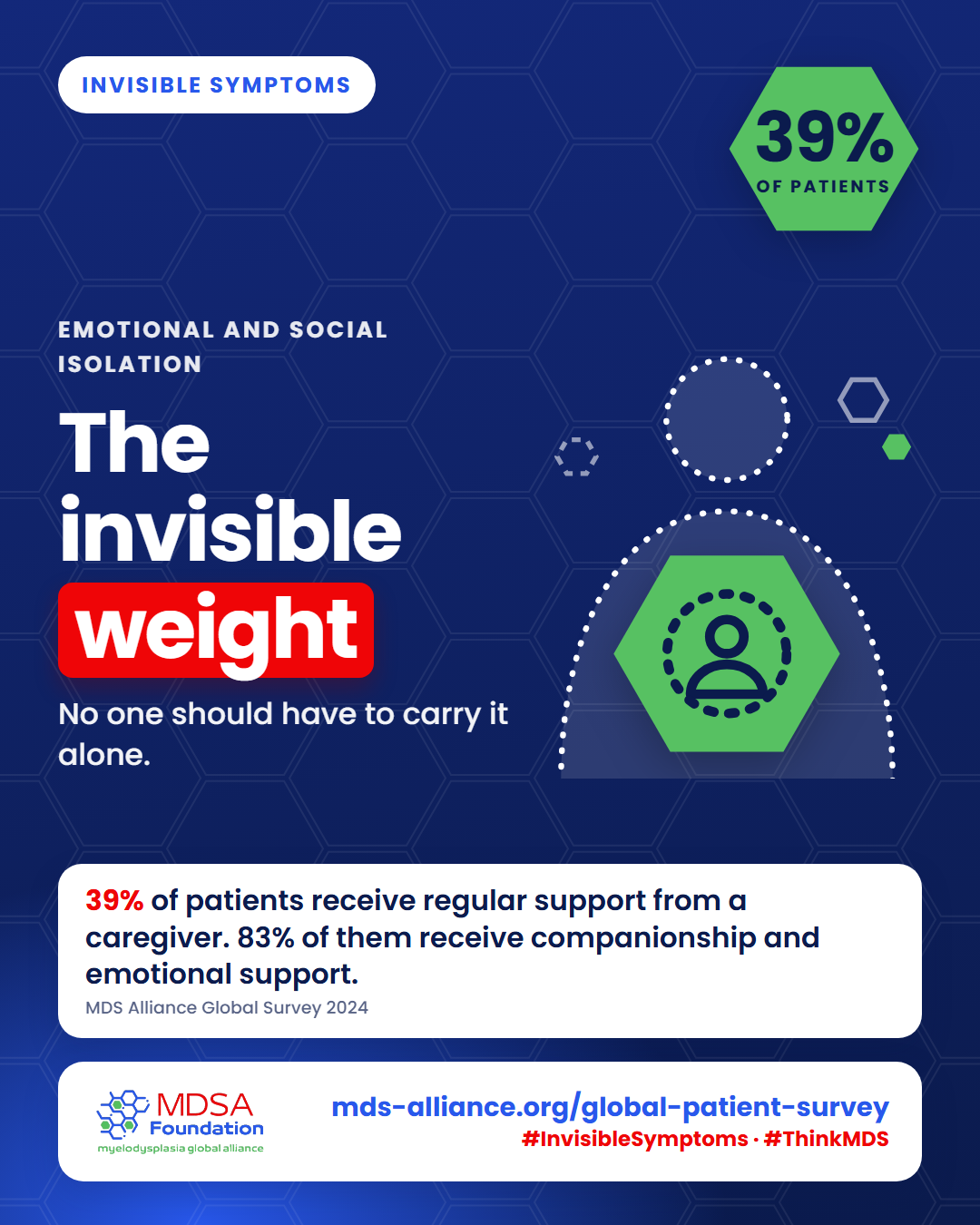
The invisible weight
No one should have to carry it alone.
The invisible impact of MDS extends beyond physical symptoms. Fatigue, uncertainty and reduced activity can lead to isolation, anxiety and emotional distress.
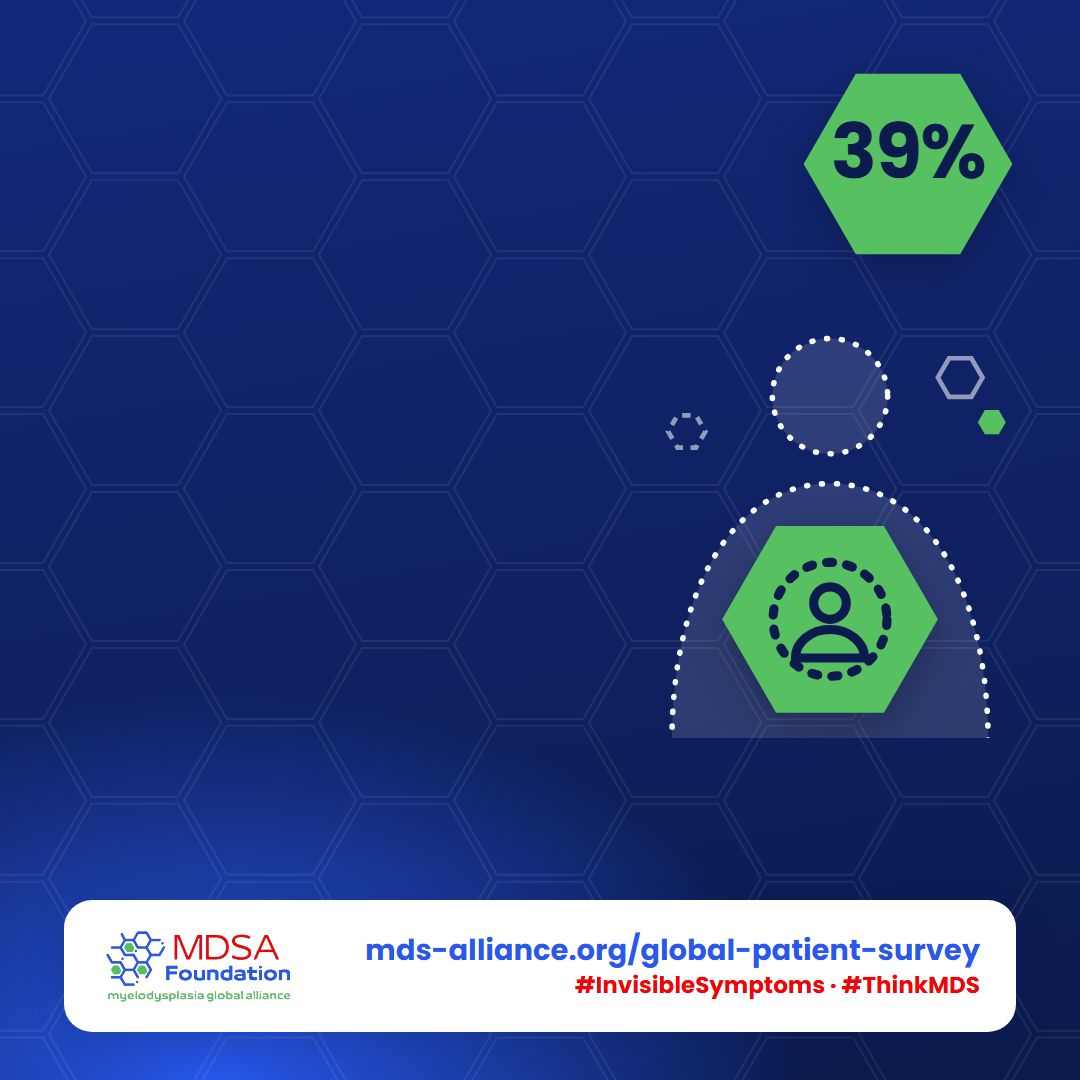
Survey link: 39% of patients required regular support from caregivers, with companionship and emotional support reported by 83% of those receiving help. This highlights the substantial hidden emotional burden of living with MDS.
Source: MDS Alliance Global Survey 2024. Symptom figures are the share of patients who reported each item as a side effect of their current or most recent treatment.
How can you get involved?
Download the cards and share them on your social media with the hashtags #InvisibleSymptoms and #ThinkMDS. Every card points back to the survey, so people can see the evidence for themselves.
Sharing in your own country or language? Jump to the text-free graphics and suggested captions for member organisations.
Text-free graphics for member organisations
Download the same graphics without the wording, so you can add your own message in your own language. Free to use with your patients and carers.
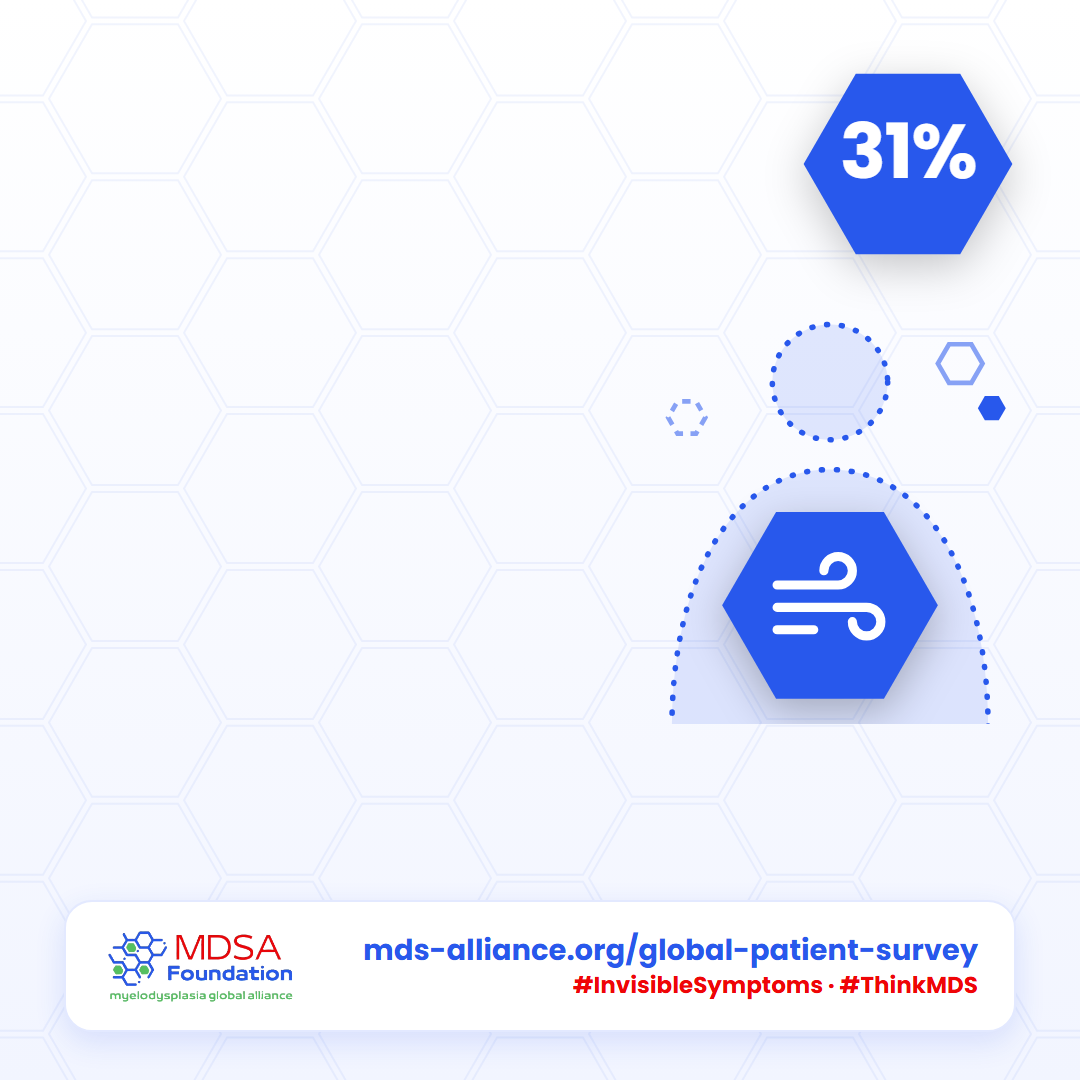
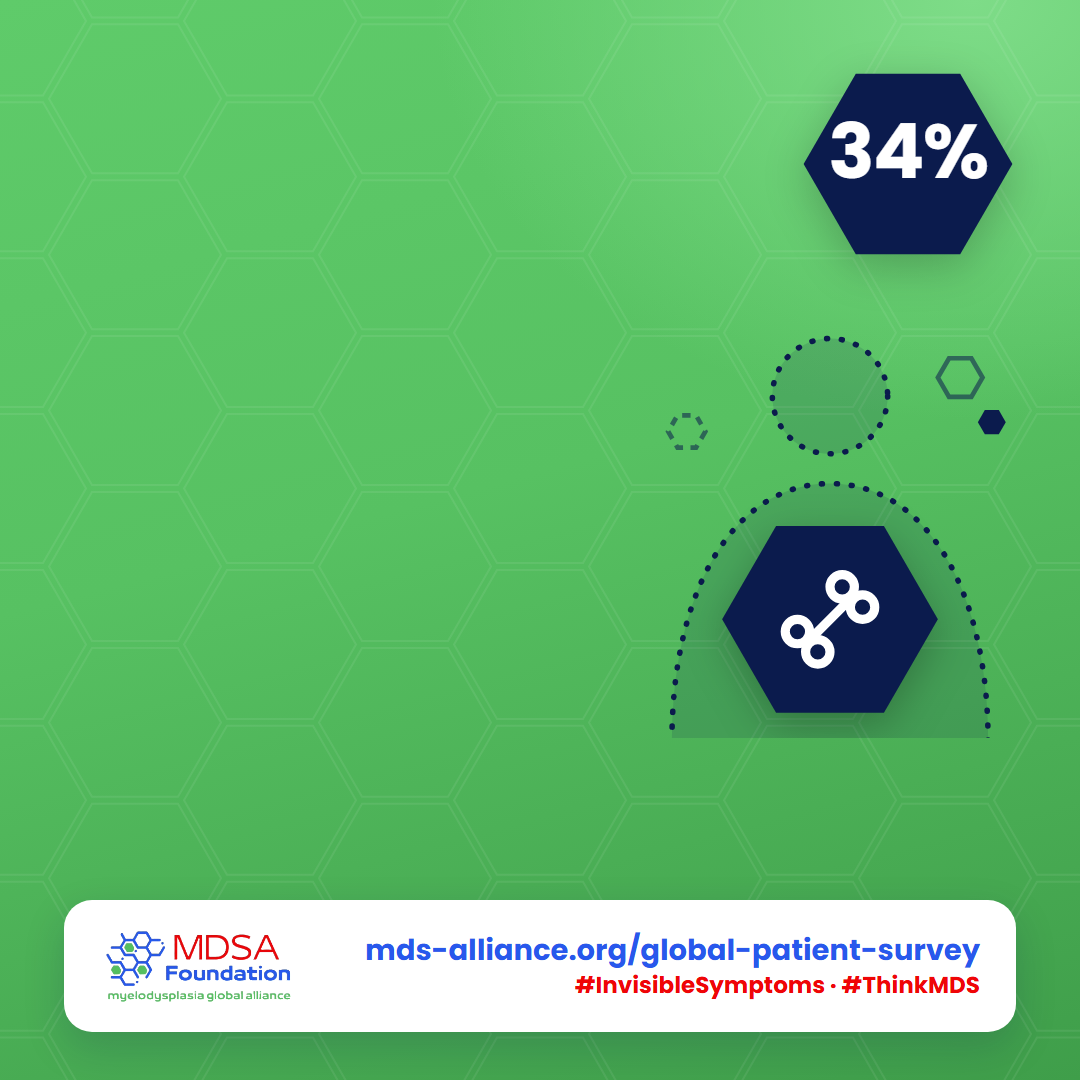
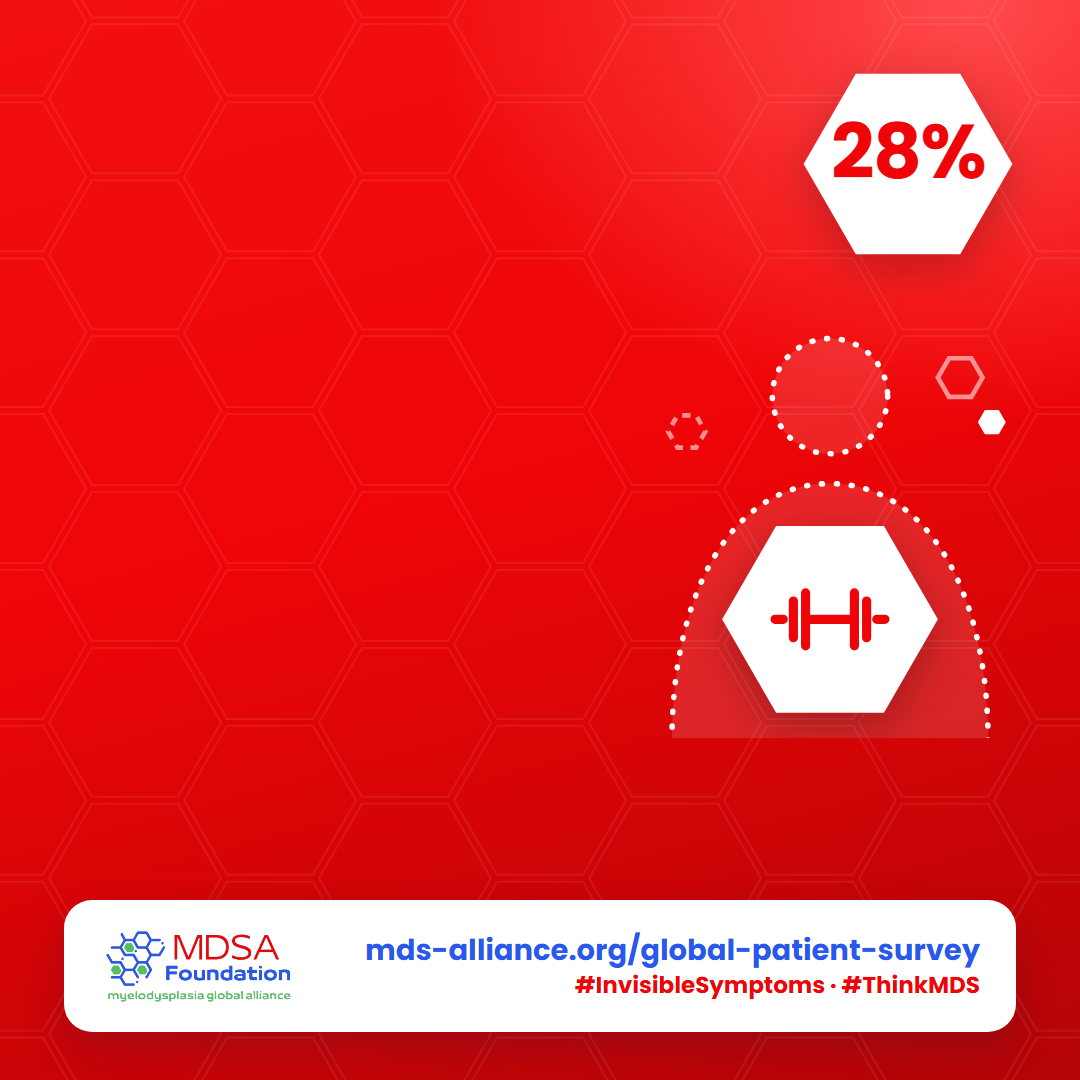
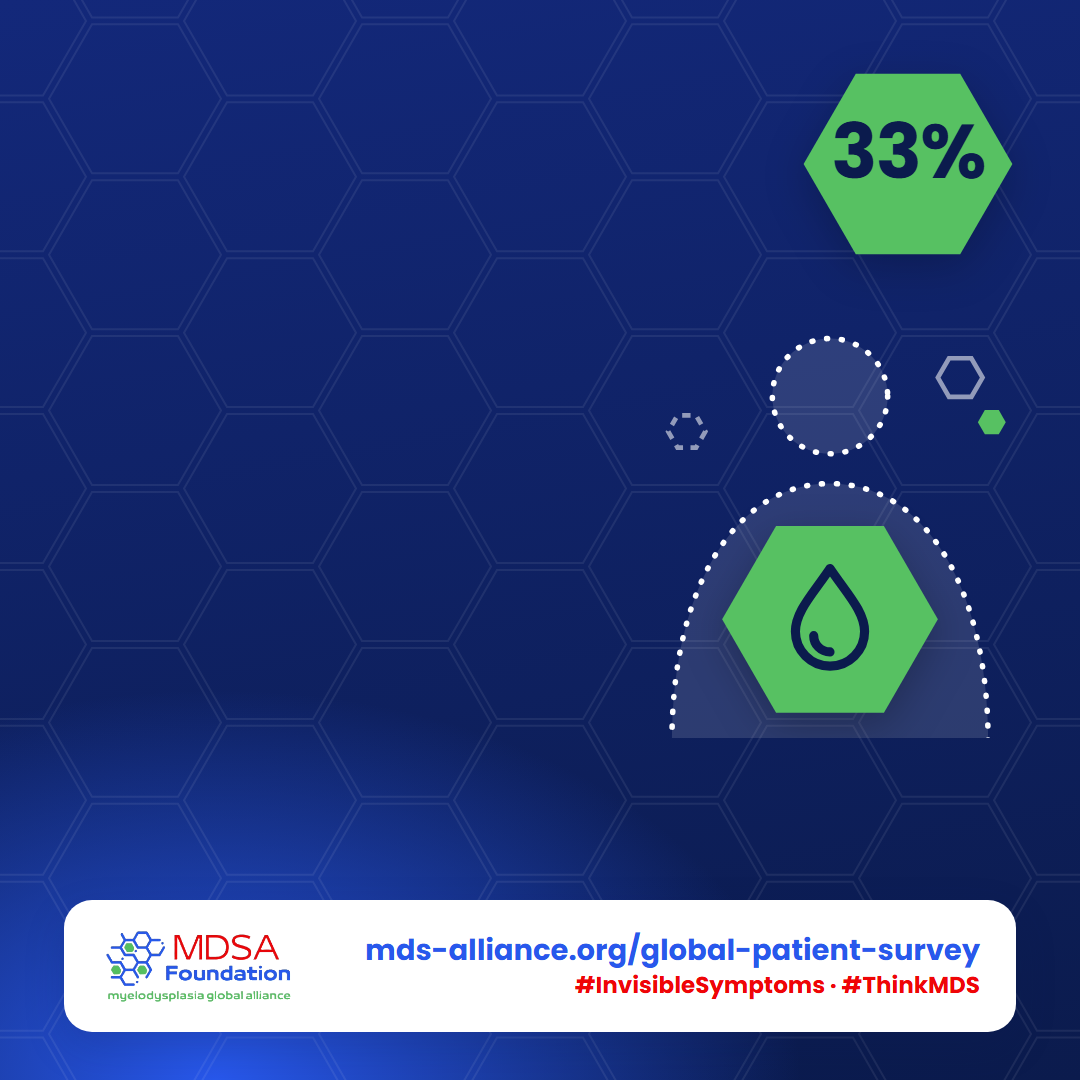
Each graphic is available as a square (1080 × 1080 px) and a portrait image. The design, logo, survey percentage and website stay; the space for text is left empty.
Suggested captions
Feel free to translate or adapt, and add your own organisation's handle and website.
01 Fatigue: Running on empty
I look ok but I'm running on empty. Fatigue is one of the most common and debilitating symptoms of MDS. It often goes unseen by others but can significantly affect daily activities, independence and emotional wellbeing. In the MDS Alliance Global Survey 2024, 46% of patients reported fatigue, lack of energy or tiredness, making it the most commonly reported symptom. Read the survey: mds-alliance.org/global-patient-survey
02 Shortness of breath: Every breath counts
A short walk can feel like a marathon. Many people with MDS experience breathlessness even during routine tasks such as walking, climbing stairs or household activities. In the MDS Alliance Global Survey 2024, 31% of patients reported shortness of breath or trouble breathing. This symptom is often linked to low red blood cell counts and anaemia. Read the survey: mds-alliance.org/global-patient-survey
03 Joint and bone pain: Pain you cannot see
Looking fine doesn't mean feeling fine. Pain in joints and bones may not be visible but can make movement difficult and reduce quality of life. In the MDS Alliance Global Survey 2024, 34% of patients experienced joint or bone pain. Among younger patients aged 30-45 years, this was 51%, highlighting a significant hidden impact on daily functioning. Read the survey: mds-alliance.org/global-patient-survey
04 Muscle weakness: When strength fades
Simple tasks can require extraordinary effort. Muscle weakness can limit mobility, reduce stamina and make everyday tasks exhausting. In the MDS Alliance Global Survey 2024, 28% of patients reported muscle weakness, affecting their wellbeing and independence. Read the survey: mds-alliance.org/global-patient-survey
05 Anaemia: Running low on energy
The body is working harder than it appears. Anaemia often causes profound exhaustion, dizziness and reduced physical capacity, even though patients may appear well externally. In the MDS Alliance Global Survey 2024, 33% of patients reported anaemia-related symptoms. Caregivers also ranked anaemia among the symptoms having the most severe impact on patients' lives. Read the survey: mds-alliance.org/global-patient-survey
06 Frequent infections: Invisible internal battle
Fighting battles no one else can see. MDS can weaken the immune system, increasing susceptibility to infections that may not be obvious to others. In the MDS Alliance Global Survey 2024, 13% of patients reported frequent infections, reflecting the underlying bone marrow dysfunction associated with MDS. Read the survey: mds-alliance.org/global-patient-survey
07 Dizziness and light-headedness: When the world spins
Standing still doesn't always feel stable. Patients may experience balance problems, dizziness or feeling faint, affecting confidence and safety. In the MDS Alliance Global Survey 2024, 28% of patients reported dizziness or light-headedness, a symptom often associated with low blood counts and anaemia. Read the survey: mds-alliance.org/global-patient-survey
08 Easy bruising and bleeding: More than a bruise
What you see is only part of the story. Although bruises may occasionally be visible, the underlying risk of bleeding is often hidden and can cause significant anxiety. In the MDS Alliance Global Survey 2024, 22% of patients reported easy or unusual bruising or bleeding related to their condition or treatment. Read the survey: mds-alliance.org/global-patient-survey
09 Weight loss: Disappearing without trying
Changes can happen slowly, but their impact is real. Unintentional weight loss can occur gradually and may reflect the body's increased demands from chronic disease. In the MDS Alliance Global Survey 2024, 20% of patients reported weight loss, while caregivers identified weight loss as one of the symptoms with the most severe impact on patients' quality of life. Read the survey: mds-alliance.org/global-patient-survey
10 Emotional and social isolation: The invisible weight
No one should have to carry it alone. The invisible impact of MDS extends beyond physical symptoms. Fatigue, uncertainty and reduced activity can lead to isolation, anxiety and emotional distress. In the MDS Alliance Global Survey 2024, 39% of patients received regular support from caregivers, with companionship and emotional support reported by 83% of those receiving help. This highlights the substantial hidden emotional burden of living with MDS. Read the survey: mds-alliance.org/global-patient-survey
See the evidence
The MDS Alliance Global Survey 2024 gathers patient and caregiver experiences from around the world.